

Did you know that a single search engine adjustment can impact over 90% of search results? That’s the massive scale we’re dealing with when these ranking systems evolve. For website owners and digital marketers, staying ahead means understanding how these changes work.
The digital landscape transforms constantly. What worked yesterday might not work tomorrow. This guide helps you decode these complex ranking shifts and turn them into opportunities.
We’ll explore how search systems retrieve data and deliver relevant results. You’ll learn to interpret changes and assess their impact on your site’s visibility. Our focus is on sustainable practices that align with evolving quality standards.
From historical context to the latest core updates, this comprehensive resource gives you the complete picture. Whether you’re a business owner or content creator, you’ll gain actionable strategies for long-term growth.
Table of Contents
Key Takeaways
- Search engine adjustments can dramatically reshape online visibility
- Understanding ranking system evolution is crucial for digital success
- Proactive adaptation turns potential challenges into growth opportunities
- Sustainable practices align with evolving search quality standards
- Historical context helps predict future ranking trends
- Regular assessment keeps your strategy current and effective
- Confident navigation leads to maintained search presence
Introduction: The Evolution of Google’s Search Landscape
What began as basic web indexing has grown into a complex ecosystem of ranking factors. The search landscape has transformed dramatically from occasional tweaks to continuous refinement processes.
Setting the Stage for SEO in a Dynamic Environment
Today’s digital environment requires constant attention to ranking signals. The system now uses sophisticated combinations of factors to evaluate content quality.
Most changes are minor and go unnoticed by website owners. However, major shifts can reshape search engine results pages overnight.
Why Staying Updated Matters
Keeping current with search engine developments isn’t just about reacting to ranking fluctuations. It’s about understanding evolving priorities and aligning your strategy accordingly.
The dynamic nature of online search means yesterday’s successful tactics may not work tomorrow. Continuous learning becomes essential for maintaining visibility.
This evolution reflects a commitment to improving user experience by rewarding helpful content. Understanding this context helps you see changes as opportunities rather than disruptions.
Understanding Google Algorithm Updates
Major search engine refinements occur periodically, reshaping how content appears in search results. These changes help improve the overall quality of information available to users.
Defining Core vs. Spam Updates
Core updates represent the most significant changes to ranking systems. They happen several times yearly and affect content evaluation across the entire web. When Google announced a core update, they typically provide advance notice through official channels.
Spam updates target specific manipulative practices instead of broad system changes. These focus on neutralizing tactics like link schemes or automatically generated content. Understanding this difference helps diagnose why a site might be affected.
How Updates Impact Search Rankings
The effect on search results varies widely between sites. Some experience dramatic visibility changes while others see minimal impact. This depends on how well content aligns with quality standards.
Core updates can cause both positive and negative ranking changes. Recognizing which type of update has occurred allows for appropriate action. A core update suggests content quality issues, while a spam update indicates potential guideline violations.
Historical Overview: From the Google Dance to Modern Core Updates
Remember when website rankings would literally dance across search results for days at a time? This phenomenon marked the early era of search optimization, creating both excitement and anxiety among webmasters.
The monthly « Google Dance » combined major index refreshes with ranking system changes. Positions would fluctuate dramatically during multi-day rollouts. This predictable schedule eventually gave way to more continuous improvements.
The Cassandra update represented a pivotal transition point. It targeted basic quality issues like excessive linking between co-owned domains. Hidden text and links received significant penalties, establishing important precedents.
This shift from named monthly updates to fluid refinement changed SEO fundamentals. Today’s approach focuses on consistent quality rather than timing adjustments. Understanding this historical context helps webmasters see modern changes as part of an ongoing quality journey.
The evolution reflects technological maturation and commitment to better search experiences. What began as dramatic monthly shifts now flows as continuous improvement.
The Evolution of Core Updates and Their SEO Impact
Modern search refinement cycles have accelerated dramatically, with 2023 and 2024 marking significant turning points. These periods introduced changes that reshaped content evaluation standards across industries.
The intensity of these adjustments required website owners to adapt quickly. Understanding the timing and focus of each change became crucial for maintaining search presence.
Milestone Updates: 2023 and 2024 Core Changes
The 2024 core update series represented some of the most impactful ranking system changes in recent memory. The march 2024 core adjustment took an unprecedented 45 days to fully deploy.
This extended rollout period created uncertainty for site owners. The search company announced completion nearly a week after the process actually finished.
Meanwhile, the august 2024 core refinement launched with a clear mission. It specifically targeted low-value SEO content while promoting genuinely helpful material.
The 2023 core update cycle established a pattern of multiple significant adjustments per year. August, October, and November each brought substantial changes to ranking systems.
| Update Period | Deployment Duration | Primary Focus | Key Impact |
|---|---|---|---|
| March 2024 Core | 45 days | Low-quality content reduction | New spam policies introduced |
| August 2024 Core | Approximately two weeks | High-quality content promotion | Demotion of SEO-focused pages |
| 2023 Core Series | Typically two weeks | Content quality assessment | Pattern of multiple updates established |
These milestone changes collectively emphasized the search engine’s evolving understanding of quality. The focus shifted beyond simple keyword matching toward genuine user value.
Navigating Spam and Link Updates
Website owners often face unexpected ranking changes when spam detection systems identify problematic link patterns. These targeted adjustments focus specifically on manipulative linking practices rather than broad content quality issues.
Insights on the Link Spam Update
The most comprehensive link spam update launched in December 2022 and completed in January 2023. This marked a significant advancement in detecting unnatural linking schemes across multiple languages.
When the search company announced this adjustment, they highlighted its use of « SpamBrain » technology. This AI-based system neutralizes the impact of artificial link networks designed solely to manipulate rankings.
The 2024 spam update cycle demonstrated continued vigilance with multiple rollouts throughout the year. Each typically completes within approximately two weeks, though complex deployments can take longer.
| Update Period | Duration | Primary Focus | Key Features |
|---|---|---|---|
| December 2022 | Nearly one month | Unnatural link patterns | SpamBrain AI implementation |
| October 2023 | Two weeks | Concurrent core and spam targeting | Multi-faceted approach |
| June 2024 | About one week | Subtle manipulation tactics | Increased detection sophistication |
« Links should provide genuine value to users, not just pass ranking authority. »
Understanding these adjustments is crucial because penalties can be severe. Sites relying on manipulative practices may experience dramatic ranking drops until they clean their link profiles.
The 2023 spam update showed the ability to address both content quality and linking practices simultaneously. This demonstrates the evolving complexity of search integrity systems.
Timeline of Major Algorithm Changes
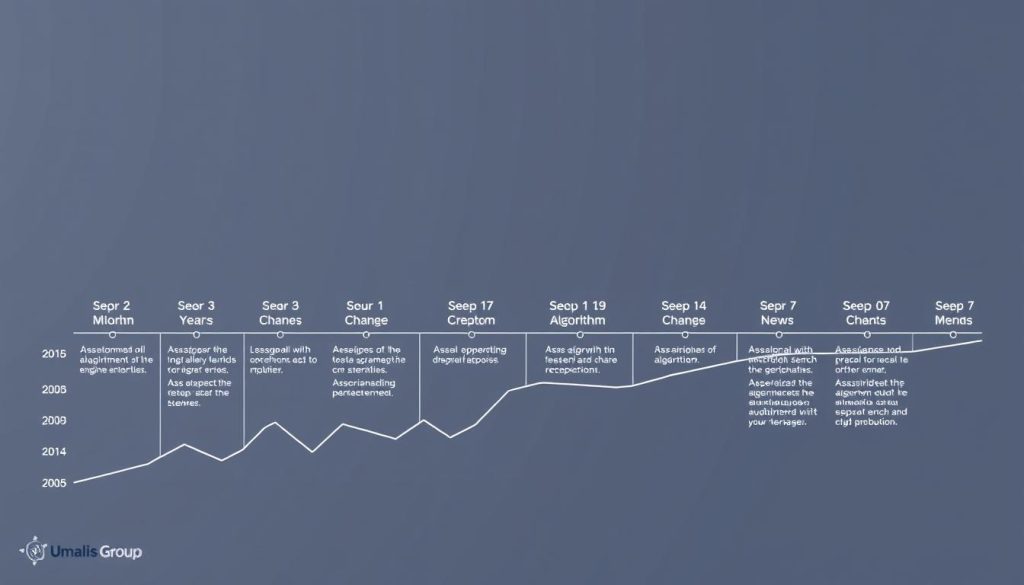
Tracking major search ranking changes helps you understand when and why your visibility shifts. Having specific dates lets you connect traffic patterns with particular system adjustments.
This timeline shows the rhythm of improvements across different update types. Core changes typically take longer than spam-focused refinements.
Key Dates and Update Durations
The march 2025 core update maintained the standard two-week deployment pattern. It started rolling on March 13 and finished by March 27.
June’s refinement began on June 30 and completed on July 17. This june 2025 core adjustment took slightly over two weeks to fully implement.
December 2024 was particularly busy with both core and spam updates. The december 2024 core ran from December 12-18, while the spam update followed from December 19-26.
The november 2024 core proved exceptional with a three-week rollout. It created extended uncertainty for site owners monitoring their positions.
| Update Type | Start Date | Completion Date | Duration |
|---|---|---|---|
| March 2025 Core | March 13 | March 27 | 2 weeks |
| June 2025 Core | June 30 | July 17 | Over 2 weeks |
| December 2024 Core | December 12 | December 18 | 1 week |
| November 2024 Core | November 11 | December 5 | 3 weeks |
| December 2024 Spam | December 19 | December 26 | 1 week |
When Google announced these changes, they provided clear start dates. The pattern shows core updates typically take two weeks, while spam refinements finish faster.
This 2025 core series continues the pattern of multiple significant changes yearly. Each adjustment targets improved content evaluation methods.
Analyzing Google’s Update Trends and Patterns
The rhythm of search engine refinements follows a predictable cadence that savvy website owners can learn to anticipate. Recent analysis shows these adjustments have increased from just 2-3 annually to 4-6 each year.
Most websites don’t need excessive concern about every core update. The search company may roll out changes broadly, but sites maintaining high standards often see minimal ranking fluctuations.
Timing patterns reveal spacing of 2-4 months between major adjustments. These typically avoid holiday periods and major shopping seasons. Official announcements usually precede significant changes.
Search results remain dynamic because user expectations constantly evolve. New content appears daily, requiring continuous recalibration of what represents the best answers.
Recent algorithm update trends show more targeted refinements rather than complete overhauls. The system fine-tunes how specific quality signals are weighted and evaluated.
Some industries experience more dramatic shifts than others. Health, finance, and e-commerce sites often see significant changes due to heightened quality standards. Remember that website modifications don’t guarantee noticeable improvements in search results unless they address fundamental quality issues.
Manual Actions and Site Reputation: What to Watch For
May 6, 2024 marked a significant shift in how search companies address site reputation abuse through direct human review. The company confirmed this new approach targets « parasite SEO » tactics where established domains host third-party content primarily for ranking manipulation.
Understanding the difference between manual and automated enforcement helps you respond appropriately to ranking changes. Human reviewers issue manual actions for clear guideline violations, while systems automatically demote content through ranking adjustments.
Understanding Manual vs. Automated Enforcement
Manual actions represent direct penalties from human reviewers. You receive specific notifications in your search console explaining the violation. These require active remediation and formal reconsideration requests.
Automated enforcement happens through system adjustments that demote content without human intervention. Improvements in content quality can automatically restore rankings over time.
Site reputation abuse occurs when reputable websites rent space to third parties who publish content solely to leverage domain authority. The hosting site often lacks editorial oversight, essentially selling access rather than maintaining quality.
| Enforcement Type | Detection Method | Notification | Resolution Process |
|---|---|---|---|
| Manual Actions | Human review | Specific violation details | Active remediation required |
| Automated Enforcement | System algorithms | No explicit notification | Improvements may auto-restore |
| Site Reputation Abuse | Currently manual | Search console alerts | Future algorithmic planned |
The company also emphasized that legitimate partnerships and sponsored content remain acceptable with proper disclosure and editorial control. Regular monitoring of search systems helps detect both manual actions and algorithmic impacts on your search results.
Future ranking adjustments will likely automate site reputation detection. This follows the typical pattern of initial manual intervention followed by scaled system solutions once patterns become clear.
Local Search Results and Regional SEO Considerations
When the search company announced a specific local search update in late 2021, it underscored the importance of this specialized SEO discipline. This refinement, which ran from November 30 to December 8, particularly impacted businesses with multiple locations.
Local search results operate on a different set of rules. They prioritize proximity, relevance, and prominence in a unique blend. For users, this means finding the closest, most reputable solutions quickly.
The most visible feature in these search results is the Map Pack, or the local « 3-pack. » Appearing here is often more valuable than the top organic listing. This makes optimizing your business profile absolutely critical for visibility.
Your ranking can change block by block because proximity is a primary factor. A bakery in Paris will show up differently for someone searching in the 1st arrondissement versus the 20th.
Strategic Adjustments for the French Market
Tackling the French market requires thoughtful localization. It’s not just about translation. You need proper French address formats on your business profile and local schema markup on your website.
Building a strong presence on French business directories and earning authentic reviews in French are powerful strategies. Creating content that speaks to regional search intent and cultural nuances will also set you apart.
Since most local searches happen on phones, a flawless mobile experience is non-negotiable. Users are actively looking for nearby solutions, and a slow or clunky site will send them to a competitor.
The Role of Content Quality Amid Algorithm Shifts
Think of your favorite restaurant list from five years ago. Some spots might still be great, while others have been surpassed by newer, better options. This restaurant analogy perfectly illustrates how a core update reshuffles search results.
Content that drops in rankings isn’t necessarily bad. There are simply better alternatives available now. The search company may reassess quality signals with each refinement cycle.
Evolving standards demand more comprehensive, expert-driven content. Surface-level information no longer competes effectively against detailed, original resources.
| Quality Factor | Previous Approach | Current Standard |
|---|---|---|
| Depth of Coverage | Basic keyword matching | Comprehensive topic treatment |
| Author Expertise | Generic content creation | First-hand experience required |
| User Value | Search engine optimization focus | Genuine user assistance priority |
The impact of any algorithm update often correlates with how well content serves user intent. Pages that fully answer questions tend to maintain visibility.
Quality isn’t static. What worked five years ago may be inadequate today. Focus on creating genuinely helpful resources that deserve prominent placement.
Leveraging AI Innovations in Search Technology
AI-powered search capabilities have transformed the way websites need to approach content creation and optimization. The introduction of generative features represents a fundamental shift in how information gets delivered to users.
Impact of AI on the New Update Landscape
When Google announced AI Overviews in May 2024, it changed the search results landscape dramatically. These AI-generated summaries appear at the top for many queries, providing instant answers.
This innovation means your content must be exceptionally comprehensive to earn clicks. The system now understands context and intent at unprecedented levels. Google also uses advanced models to detect low-quality content automatically.
Practical Tips for Implementing AI Strategies
Focus on creating content that addresses user needs thoroughly. Use AI tools to identify gaps in your coverage compared to competitors. Optimize for semantic relevance rather than exact keyword matching.
Remember that human expertise remains crucial. The latest core update rewards genuine authority and firsthand knowledge. Your strategy should balance AI assistance with authentic human value.
Each algorithm update reinforces the importance of quality over quantity. The future of google search favors resources that genuinely help users solve problems.
Preparing for Future Google Core Updates

Building a website that withstands search system changes requires proactive planning rather than reactive fixes. Future-proofing means creating content that naturally aligns with quality standards before any core update occurs.
Patience becomes your greatest asset after making improvements. The search company’s systems need time to recognize sustained quality enhancements. Some changes show effect quickly, while others take months to fully register.
Regular content audits help identify potential weaknesses before they become problems. Look for thin content, outdated information, and pages lacking authority signals. This preventative approach saves you from post-update scrambling.
Future algorithm update cycles will likely continue emphasizing E-A-T principles. Establish clear author credentials and cite reliable sources to demonstrate expertise. This builds trust with both users and ranking systems.
| Strategy Approach | Key Activities | Expected Outcome |
|---|---|---|
| Proactive Preparation | Regular content audits, E-A-T building | Stable visibility through updates |
| Reactive Response | Post-update fixes, temporary changes | Unpredictable ranking fluctuations |
Diversify your content across different formats and user journey stages. Avoid over-reliance on a few high-traffic keywords. This creates resilience against shifting search results preferences.
While Google may not guarantee specific ranking improvements, consistent quality practices increase stability. Focus on creating genuinely helpful content that serves your audience’s evolving needs.
Sustainable SEO Practices for Continuous Growth
Building lasting search presence requires thinking beyond temporary ranking tactics. Sustainable practices focus on creating genuine value that stands the test of time.
Instead of chasing quick fixes, invest in improvements that serve your audience. Rewriting content for clarity or restructuring pages for better navigation makes lasting differences.
Long-Term Content Strategies
Content clusters demonstrate expertise across entire topics rather than isolated keywords. Linking related articles shows comprehensive understanding to both users and search systems.
Regular content refreshes keep information current and relevant. Outdated material becomes a liability during core updates when search engines reassess quality.
Consistent publishing patterns build trust over time. Sites that regularly maintain and improve content weather algorithm update changes more effectively.
Technical foundations like fast loading speeds and mobile optimization support sustainable growth. These elements won’t suddenly become obsolete with the next system refinement.
The most successful strategies align with the mission of delivering helpful search results. When you genuinely serve searcher needs, you naturally adapt to changes in google search systems.
Tools and Techniques for Post-Update Analysis
Having the right data at your fingertips makes all the difference when responding to search visibility changes. Proper analysis helps you understand exactly what happened and guides your recovery strategy.
Using Search Console and Analytics Effectively
Start with Google Search Console when you notice position drops. This free tool shows exactly how your site performs in search results. It tracks position changes, click-through rates, and impression trends.
Timing matters significantly. Google confirmed that you should wait at least one full week after a core update completes before analyzing data. Rankings often fluctuate during rollout periods.
Compare the right timeframes for accurate assessment. Analyze performance from one week after update completion against one week before it started. This isolates the update’s impact from normal volatility.
Review your top pages and queries individually. A core update might affect only certain content sections. This targeting points to specific quality issues needing attention.
- Small drops (position 2 to 4) usually don’t require drastic action
- Large drops (position 4 to 29) signal serious content concerns
- Analyze different search types separately – Web, Images, Video, News
- Check competitor movements for additional insights
Combine Search Console data with analytics platforms. If rankings drop but engagement improves, you might be attracting more qualified traffic. This comprehensive approach gives the full picture.
Real-World Cases: Success Stories and Lessons Learned
Concrete examples of website recoveries offer powerful lessons for adapting to search system refinements. These case studies show what actually works when rankings change unexpectedly.
Case Studies Highlighting Adaptation to Updates
One e-commerce site transformed its fortunes after a major ranking drop. They replaced generic product descriptions with detailed testing insights and real use cases.
A health information portal regained significant traffic by adding medical credentials and citing recent research. This demonstrated expertise that search systems value highly.
Patience proved crucial in many recovery stories. Sites often waited months for improvements to register fully in search results. Quality changes need time to be recognized.
Local businesses found success by optimizing their online profiles and creating region-specific content. This approach resonated strongly with local google search patterns.
The common thread across all success stories was authenticity. Sites providing genuine value consistently outperformed those using shortcuts. This principle holds true through every core update.
These real-world examples demonstrate that sustainable strategies win long-term. Each algorithm update reinforces the importance of serving real user needs above all else.
Conclusion
Navigating the ever-changing search landscape ultimately comes down to embracing quality as your guiding principle. The journey from early ranking shifts to today’s sophisticated systems shows consistent progress toward rewarding genuinely helpful content.
Each core update represents systematic improvement rather than arbitrary disruption. Understanding this evolution helps you see changes as opportunities to better serve your audience. The fundamental goal remains constant: create content that genuinely helps people.
Success in google search means building strong foundations that withstand ranking fluctuations. Sustainable practices focused on user value will always outperform short-term tactics. Future algorithm update cycles will continue refining how search results identify quality.
By maintaining focus on authentic expertise and genuine user assistance, you position your site for lasting visibility. Embrace the evolution of search systems as a path toward creating better online experiences for everyone.
FAQ
What is the difference between a core update and a spam update?
A core update is a broad change to Google’s main ranking systems, designed to improve how search results reward high-quality content. A spam update, like the link spam update, specifically targets behaviors that violate Google’s spam policies, such as unnatural linking. Core changes can affect many sites, while spam adjustments often target specific abuses.
How long does a typical core update take to roll out?
Most core updates, such as the March 2024 core update, are fully implemented over a period of about two weeks. The rollout isn’t instantaneous, so changes in search rankings may be gradual as the new systems are applied across the web’s vast index.
My site’s rankings dropped after an update. What should I do first?
First, don’t panic. Check Google Search Console for any manual actions or critical messages. Then, review your content against Google’s core update guidance, focusing on E-E-A-T (Experience, Expertise, Authoritativeness, Trustworthiness). Look for content that may be thin, outdated, or not genuinely helpful.
How do manual actions differ from algorithmic penalties?
A manual action is a human-applied penalty notified in Google Search Console for a serious policy violation. An algorithmic effect, like from a core or spam update, is automated and applied by the search systems. Manual actions require a direct fix and a reconsideration request, while algorithmic impacts require improving your site overall.
What role does site reputation play in ranking after these changes?
Site reputation is increasingly important. Google’s systems assess the overall trustworthiness and authority of a website. Building a strong, positive reputation through high-quality content, expert contributions, and earning natural links from reputable sources helps your site withstand and benefit from ranking updates.
Are local search results affected differently by core updates?
Yes, local search results can be uniquely impacted. Updates may refine how proximity, relevance, and prominence are weighted for local queries. Ensuring your Google Business Profile is complete and accurate, and that your site has strong local signals like NAP (Name, Address, Phone number) consistency, is crucial.
How can AI tools help me adapt to the new search landscape?
AI innovations can assist with content gap analysis, trend forecasting, and automating technical audits. However, they should augment human expertise, not replace it. Use AI to handle repetitive tasks, freeing up your time to focus on creating original, valuable content that truly serves users.