

Welcome to Umalis. We understand the unique pressures you face as an independent professional. In today’s fast-paced environment, mastering how you manage your tasks is crucial. It sets you apart as a competitive and highly skilled individual.
True productivity is not about working more hours. It’s about working smarter. This approach allows you to achieve optimal results while protecting your personal well-being. You can build a sustainable career without the risk of burnout.
This guide is your comprehensive roadmap. We provide established methodologies and practical techniques. These strategies have been tested across various professional contexts. Our goal is to help you transform your daily habits for lasting success.
You will learn how effectiveness and smart resource allocation create powerful outcomes. We present a holistic approach to enhancing your performance. This covers time management, goal setting, and environmental optimization.
Table of Contents
Key Takeaways
- Work efficiency is a fundamental skill for standing out in a competitive market.
- Smart strategies focus on output quality, not just the number of hours worked.
- Improved performance directly impacts income potential and client satisfaction.
- A holistic approach includes time management, goal setting, and reducing stress.
- You can implement actionable techniques immediately for tangible improvements.
- Balancing professional demands with personal life is key to avoiding burnout.
- Umalis serves as your trusted companion for building a sustainable career.
Discovering the Importance of Work Efficiency
In the current professional landscape, how you manage your resources determines your trajectory. For independent professionals, this understanding separates occasional success from sustained achievement.
What Work Efficiency Means in Today’s Workplace
Modern workplace efficiency extends beyond quick task completion. It represents your capacity to deliver exceptional outcomes while optimizing time, energy, and expertise.
This approach focuses on achieving business plan goals with minimal resource waste. The aim is better utilization of your capabilities rather than merely working longer hours.
The Impact on Career Growth and Business Success
Superior performance directly influences your competitive positioning. Clients increasingly value professionals who deliver quality results within realistic parameters.
This creates a foundation for sustainable career advancement. You can take on more challenging projects and expand your client base.
Business success becomes achievable through consistent reliability and strategic capacity. These skills compound over time, creating significant advantages in the marketplace.
Ultimately, efficiency enables you to pursue ambitious financial goals while maintaining crucial work-life balance.
Understanding Work Efficiency: Definition and Core Principles
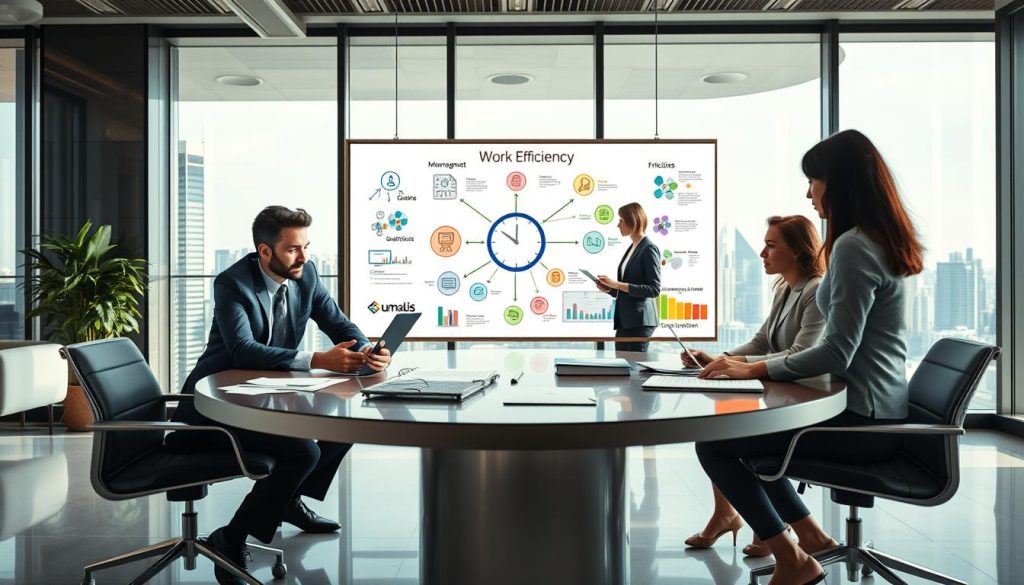
Clarity in your professional approach begins with understanding fundamental distinctions. We guide you through the core principles that form the bedrock of a high-performing practice.
Efficiency Versus Effectiveness in the Workplace
Many professionals use these terms interchangeably, but the nuance is critical. Effectiveness is the ability to achieve desired results and meet your objectives. For example, successfully completing a client project makes you effective.
Efficiency, however, focuses on how you achieve those results. It’s about optimizing your resources—like time, energy, and skills—to reach your objectives without waste.
An efficient professional delivers high-quality outcomes on schedule, avoiding overtime. An effective one might achieve the same goal but exhaust their resources in the process.
Balancing Results with Resource Management
Sustainable success requires both qualities. Efficiency without effectiveness is busywork. Effectiveness without efficiency leads to burnout.
The core principle is conscious resource optimization. You evaluate how you invest your most valuable assets. Each effort should generate a strong return.
Mastering this balance allows you to structure your processes for maximum impact. It is the key to a lasting and rewarding career. To learn more about applying these concepts, explore our guide on how to enhance your productivity and effectiveness.
Essential Time Management Techniques for Increased Productivity
Effective time allocation separates consistently high-performing professionals from those who struggle with overwhelming workloads. We present two powerful methods you can implement immediately to transform your daily productivity.
Implementing the Pomodoro Technique
The Pomodoro Technique structures your time into focused 25-minute sessions called « pomodori. » Begin by creating a list of your current tasks. Set a timer for exactly 25 minutes and commit to uninterrupted focus.
After each session, take a 5-minute break to refresh your mind. This rhythm maximizes concentration while preventing mental fatigue. After four cycles, reward yourself with a longer 15-30 minute break.
Optimizing Your To-Do List and Calendar
Your to-do list becomes a strategic tool when organized by priority. Group similar tasks together and estimate the time required for each. This approach helps you allocate appropriate sessions throughout your day.
Visual planning with a calendar provides clarity about your workload. Schedule tasks and meetings in advance to anticipate busy periods. This proactive management prevents last-minute stress and enhances overall productivity.
Setting SMART Goals for Clear Task Management
Transforming your ambitions into tangible results requires a structured approach. Vague aspirations often lead to unclear progress and missed deadlines. The SMART framework provides a proven methodology to define your objectives with precision.
Defining Specific, Measurable, Achievable, Relevant, and Time-Bound Objectives
A Specific goal is clear and unambiguous. Instead of « get more clients, » define « secure three new consulting projects in the technology sector this quarter. » This clarity sets precise expectations.
Your objectives must be Measurable. Establish concrete metrics to track your advancement. Ask « how much » or « how many » to know definitively when you achieve success.
Ensure every goal is Achievable. It should be realistic given your current skills and resources. This prevents discouragement while still encouraging growth.
Relevant goals align with your broader career vision. Your daily tasks should meaningfully contribute to your long-term priorities, not distract from them.
Finally, every goal needs a deadline. Being Time-Bound creates healthy urgency. « Complete the website redesign by October 30th » is far more actionable than « finish soon. »
This structured management of your goals turns complex projects into manageable steps. You can monitor your progress effectively and adjust your strategy as needed.
Minimizing Distractions to Maximize Concentration

Your ability to produce high-quality outcomes hinges on your capacity for sustained concentration. Modern digital tools, while essential, often create a constant stream of interruptions.
These disruptions fragment your attention and prevent deep, meaningful progress. We guide you through practical strategies to reclaim your focus.
This table outlines common distraction sources and effective mitigation techniques.
| Distraction Source | Impact on Focus | Recommended Action |
|---|---|---|
| Push Notifications | Frequent cognitive shifts, breaks concentration | Disable non-essential alerts on all devices |
| Unscheduled Interruptions | Disrupts complex task flow, increases errors | Establish and communicate clear « deep work » periods |
| Email & Messaging Apps | Creates urgency for non-critical information | Schedule specific times for checking messages |
Disabling Non-Essential Notifications
Your first line of defense is creating a quiet digital space. Review the notification settings on your phone, computer, and applications.
Turn off alerts for social media, news feeds, and non-urgent communications. This simple step protects your mental space for important tasks.
Establishing Designated Deep Work Periods
Schedule specific blocks of time for uninterrupted focus. Communicate these boundaries to colleagues, clients, or team members in advance.
During these sessions, close email tabs and put your phone away. This dedicated time allows you to tackle complex projects with full attention.
For employees in collaborative settings, coordinate with managers. Agree on shared expectations to protect these periods of high concentration for everyone.
Creating a Productive Work Environment
A thoughtfully designed workspace can transform your approach to daily tasks and boost your output. Your physical surroundings significantly influence your mental state and professional performance.
The right work environment creates a foundation for sustained concentration and high-quality results. Whether you operate from a home office or shared company space, optimization matters.
Designing an Organized and Inspiring Workspace
Start with organization. A tidy desk with efficient filing systems eliminates mental friction. This reduces visual clutter that drains cognitive resources.
Lighting plays a crucial role in any productive environment. Natural light reduces eye fatigue and improves mood. It regulates circadian rhythms for better focus.
Acoustic management is essential. Noise-canceling headphones protect concentration in shared spaces. This is vital for employees in open-plan offices.
Personalize your environment with inspiring elements. Plants improve air quality while artwork stimulates creativity. However, avoid making the space too comfortable.
Maintain professional boundaries in your work environment. A purpose-designed space sustains productive energy throughout the day. Teams benefit from well-planned shared environments.
For comprehensive guidance on optimizing your work environment, explore our detailed resources. The right balance enhances both motivation and output quality.
Boosting Productivity Through Strategic Breaks
Contrary to popular belief, stepping away from your tasks periodically can significantly enhance your overall performance and results. Many professionals mistakenly view breaks as lost time rather than strategic investments in sustained productivity.
This table outlines optimal break strategies for different work scenarios:
| Work Duration | Recommended Break | Ideal Activities |
|---|---|---|
| 1-2 hours | 10-15 minutes | Walk, stretch, hydrate |
| 3-4 hours | 20-30 minutes | Light meal, social interaction |
| Full day | Multiple short breaks | Varied activities to prevent monotony |
Recognizing the Importance of Regular Pauses
Strategic pauses refresh your mental resources. They prevent cognitive fatigue that accumulates during long hours of focused work. Employees who take regular breaks maintain higher quality attention throughout their day.
These brief interruptions allow your brain to process information subconsciously. This often leads to creative insights and problem-solving breakthroughs when you return to your tasks.
Using Breaks as an Energy Recharge Tool
Effective breaks involve complete mental disconnection from work demands. Avoid checking emails or scrolling through social media during your pause. Instead, engage in activities that provide genuine mental refreshment.
A short walk outdoors stimulates blood flow and reduces muscle tension. Brief social interactions with colleagues can satisfy important human connection needs. These practices help maintain crucial balance between intense focus and necessary recovery.
For comprehensive guidance on optimizing your performance, explore our resource on how to enhance your productivity and effectiveness through smart strategies.
Strategies for Work Efficiency
Modern professionals have access to an array of digital assistants that fundamentally change how they organize their commitments. These technological solutions provide sophisticated support for implementing effective strategies.
Leveraging Tools and Technology for Task Management
Digital platforms transform complex project demands into clear, actionable tasks. They offer visual overviews of deadlines and dependencies, which makes easier prioritization decisions.
The right tools automate routine processes and organize essential information. This approach enhances overall efficiency by freeing mental resources for high-value activities.
Your selection should match your specific professional context. Whether you prefer simple applications or comprehensive platforms, the goal remains consistent: improved work efficiency through smart technological solutions.
Start with one or two carefully chosen tools to avoid overwhelming your workflow. Fully integrate each solution before adding complexity to your strategies.
These digital companions provide valuable information about your productivity patterns. They help implement the various strategies discussed throughout this guide, making consistent progress more achievable.
Leveraging Project Management and Delegation Techniques
Mastering complex initiatives requires a strategic approach to organization and collaboration. Whether you lead a team or manage projects independently, structured methods transform overwhelming challenges into achievable objectives.
This framework applies equally to individual professionals and company teams. The right techniques ensure consistent progress toward your business goals.
Breaking Down Projects into Manageable Tasks
Large projects can feel intimidating when viewed as a single entity. Begin by dividing each initiative into smaller, concrete tasks with clear deadlines.
This process creates a visible roadmap from start to finish. You can track progress more effectively and maintain momentum throughout the project lifecycle.
Prioritization is crucial for optimal performance. Focus on activities that deliver the strongest results for your business or clients.
Effective Delegation and Team Collaboration
Delegation leverages the unique skills of team members or subcontractors. It allows managers to concentrate on high-value contributions while distributing appropriate tasks.
Clear communication establishes expectations for every delegated assignment. Provide necessary context and support to ensure quality outcomes.
Successful collaboration depends on regular progress updates and feedback. This maintains alignment across all team members and prevents misunderstandings.
| Delegation Scenario | Key Consideration | Best Practice |
|---|---|---|
| Internal Company Teams | Matching tasks to employee strengths | Regular check-ins without micromanaging |
| Independent Professionals | Selecting reliable subcontractors | Clear contracts and milestone payments |
| Client Collaboration | Managing external expectations | Transparent communication channels |
Project management tools provide essential support for this process. They help visualize workflows and track deadlines efficiently. For deeper insights, explore our guide to developing your mastery of project management.
« The strength of the team is each individual member. The strength of each member is the team. »
This comprehensive approach enables you to handle increasingly complex projects with confidence. You’ll meet tight deadlines while maintaining high standards of performance.
Conclusion
Your journey toward superior professional performance is an ongoing process of refinement. The strategies we’ve explored provide a powerful toolkit for sustainable growth.
True advancement comes from integrating these techniques into your daily routine. This personalized approach allows you to achieve your objectives with greater clarity and reduced stress.
We encourage you to view this as a long-term investment in your career. Consistent application builds the skills necessary for lasting success in today’s dynamic workplace.
For dedicated professionals seeking to amplify their results, we offer targeted support. Discover how to boost your work efficiency with Umalis and build the career you envision.
FAQ
What is the difference between work efficiency and effectiveness?
Efficiency focuses on performing tasks in the optimal way, using the least amount of time and resources. Effectiveness is about achieving the desired results and goals. The best performance combines both: doing the right things (effectiveness) in the right way (efficiency).
How can I better manage my time to improve my daily productivity?
Start by prioritizing your tasks using a clear to-do list. Techniques like time-blocking on your calendar or the Pomodoro method, which uses focused intervals, can significantly boost your concentration and help you accomplish more in fewer hours.
What role do breaks play in maintaining high performance?
Regular, strategic pauses are essential. They prevent burnout, reduce stress, and recharge your mental energy. Short breaks help maintain consistent concentration throughout the day, leading to higher quality results on your projects.
How does my work environment impact my ability to get things done?
A well-organized, dedicated workspace minimizes distractions and signals your brain that it’s time to focus. A positive physical environment directly supports your ability to concentrate, manage tasks, and sustain motivation.
What is the best way to handle multiple projects and deadlines?
Break large projects into smaller, manageable tasks. Use project management tools to track progress and deadlines. Effective delegation, when possible, ensures that the right team members handle appropriate tasks, optimizing overall resource use and progress.
How can technology and tools help me become more efficient?
The right tools streamline processes. Digital calendars, task management apps, and collaboration platforms help organize information, automate reminders, and facilitate team communication. This saves valuable hours and reduces errors.