

For independent professionals managing multiple client engagements, effective organization becomes the cornerstone of success. Your ability to deliver quality work while meeting deadlines directly impacts your professional reputation and growth potential.
Visual roadmaps provide the structure and clarity needed to navigate complex deliverables. They help you anticipate potential bottlenecks and maintain transparent workflows across all your engagements.
At Umalis, we understand the challenges facing independent consultants. Our mission at en.umalis.fr focuses on supporting your transition to professional independence with tools and strategies that ensure stability.
This comprehensive guide offers practical insights to enhance your delivery processes. You’ll discover fundamental concepts and advanced techniques that balance efficiency with work-life harmony.
Table of Contents
Key Takeaways
- Visual roadmaps provide essential structure for managing multiple client engagements
- Effective organization directly impacts professional reputation and client satisfaction
- Anticipating bottlenecks helps maintain quality across all deliverables
- Proper planning supports sustainable growth for independent consultants
- Balancing efficiency with personal well-being creates long-term success
- Strategic workflow management enables scaling your consulting practice
- Transparent processes build client trust and professional credibility
Introduction: The Power of a Project Timeline
A clear visual representation of your workflow serves as the backbone of professional service delivery. This approach transforms abstract goals into concrete, actionable steps that everyone can follow.
Understanding the Concept
A project timeline differs significantly from a simple schedule. While schedules list individual due dates, timelines show the chronological flow of events across the entire engagement.
This big-picture perspective helps you see how all pieces connect. It transforms complex deliverables into a coherent operational framework that guides your team.
Benefits for Project Managers
Project managers gain enhanced visibility into all activities. This clarity improves stakeholder communication and enables proactive risk identification before issues arise.
Effective timeline management reduces stress by providing clear roadmaps. Everyone involved can reference the same visual guide, building trust and ensuring consistent progress toward deadlines.
The Role of Project Management in Effective Timelines
Effective coordination methods provide the structural foundation that turns complex deliverables into achievable steps. This systematic approach ensures every phase progresses smoothly toward completion.
Proper management transforms abstract ideas into concrete action plans. It creates accountability while maintaining flexibility for adjustments.
Enhancing Clarity and Organization
Structured planning converts vague concepts into measurable activities. Each task receives clear definition and specific completion criteria.
« The best plans create visibility while allowing adaptability to changing circumstances. »
This organizational clarity prevents misunderstandings among team members. Everyone understands their responsibilities and how they contribute to collective success.
Aligning Team Goals and Deadlines
Timelines synchronize individual efforts with overall objectives. They reveal how each person’s work connects to the bigger picture.
This alignment prevents teams from working in isolation. It fosters collaboration and shared ownership of results.
| Benefit | Individual Impact | Team Impact |
|---|---|---|
| Clear task definition | Reduced confusion | Faster progress |
| Shared visibility | Better planning | Improved coordination |
| Goal alignment | Purpose-driven work | Collective success |
Mastering these coordination tools builds trust with stakeholders. It demonstrates professional capability while ensuring consistent delivery.
Defining Your Project Scope and Objectives
Setting clear parameters from the outset prevents misunderstandings and ensures smooth progress throughout your work. A well-defined project scope establishes boundaries that protect both you and your clients.
This initial planning phase transforms abstract ideas into concrete action plans. It creates the foundation for all subsequent decisions and resource allocation.
Creating a Detailed Project Brief
Your brief should outline specific deliverables, responsible parties, and completion criteria. Include measurable objectives that can be tracked against your progress.
Balance specificity with flexibility in your scope statement. Clear boundaries prevent scope creep while allowing minor adjustments without complete restructuring.
Establishing Key Milestones
Identify critical milestones that serve as progress checkpoints throughout the engagement. These markers provide opportunities for feedback before final deadlines.
Involve stakeholders in milestone definition to ensure alignment. This collaborative approach prevents misunderstandings that could derail your schedule.
For independent professionals, detailed briefs demonstrate professionalism while protecting against unreasonable client expectations. They create the clarity needed for successful delivery.
Selecting the Right Project Management Software
Finding the ideal digital solution for organizing client engagements involves balancing functionality with usability. The right project management software should enhance your workflow rather than complicate it.
We guide you through evaluating options that truly support your professional needs. Avoid choosing based solely on popularity or marketing claims.
Analyzing Tool Features and Compatibility
When assessing management software, prioritize features that match your specific requirements. Look for multiple visualization formats and real-time collaboration capabilities.
Consider how each tool integrates with your existing workflow. The best software adapts to your team’s technical skills while meeting client communication standards.
Gantt Charts, Kanban, and More
The gantt chart remains essential for complex dependency mapping. This visualization method provides unmatched clarity for sequential tasks.
Alternative formats like Kanban boards offer flexibility for different engagement types. Each visualization tool serves distinct purposes in your coordination tools arsenal.
Your chosen project management software should offer both detailed task views and high-level overviews. This balance ensures effective execution while maintaining stakeholder visibility.
Building a Chronological Project Timeline
Arranging activities in chronological sequence creates a foundation for predictable workflow management. This approach mirrors historical timelines that map events along a temporal axis, providing clear visual progression from start to finish.
We guide you through establishing logical flow that prevents scheduling conflicts. Your timeline should display all tasks in their natural order of completion.
Visualizing Tasks in Sequential Order
Choose between horizontal or vertical layouts based on your engagement complexity. Horizontal formats work well for linear progressions, while vertical arrangements suit multi-stream workflows.
Each activity needs clear start and end dates with defined duration. Break larger deliverables into smaller components for accurate time estimation.
Managing Task Duration and Deadlines
Establish realistic deadlines based on your actual capacity rather than optimistic projections. Historical performance data provides the best reference for setting achievable timeframes.
Include buffer periods between tasks to accommodate unexpected delays. This precaution maintains your schedule’s integrity when dependencies require additional time.
When multiple streams converge, prioritize critical path activities. Clear chronological organization demonstrates thorough planning that builds client confidence through realistic expectations.
Step-by-Step Guide to Creating Your Project Timeline
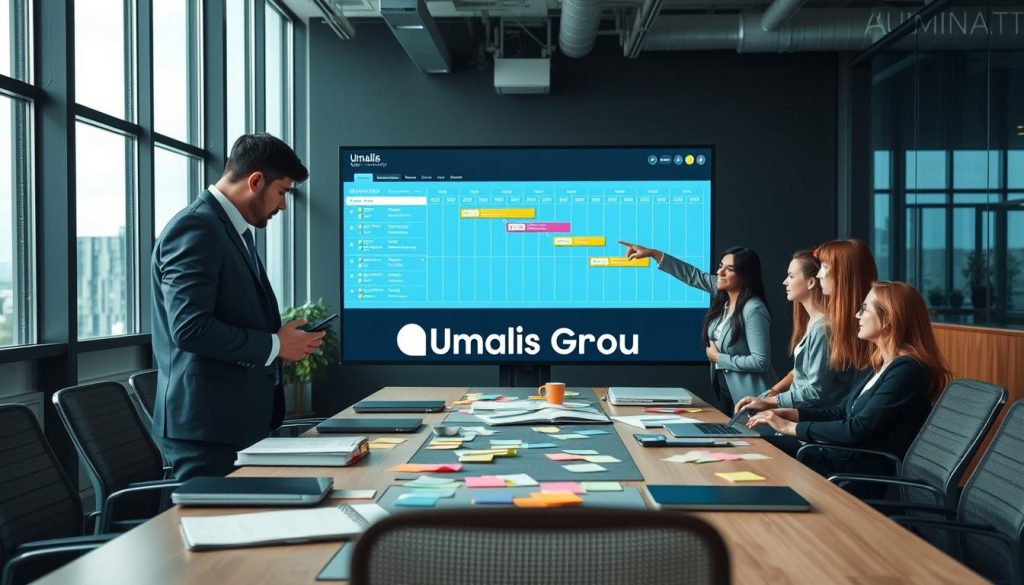
Transforming your vision into an actionable roadmap requires a systematic approach that guides every phase of your work. This methodical process ensures nothing gets overlooked while maintaining flexibility for adjustments.
Defining the Project Scope and Deliverables
Begin by thoroughly analyzing requirements and constraints. A clear scope statement establishes boundaries that protect your workflow.
Identify all deliverables with measurable success criteria. This clarity prevents misunderstandings and sets realistic expectations from the start.
Breaking Down Tasks into Manageable Chunks
The Work Breakdown Structure (WBS) approach transforms overwhelming engagements into achievable components. Group related activities into logical phases.
Each milestone becomes a progress checkpoint. Break them into specific, actionable tasks with clear completion definitions.
| Phase Level | Component Size | Time Estimate |
|---|---|---|
| Major Milestone | 2-4 weeks | Review point |
| Activity Group | 3-7 days | Weekly focus |
| Individual Task | 1-2 days | Daily action |
This structured approach to creating project frameworks saves significant time during execution. It transforms abstract concepts into concrete daily guidance.
Exploring Different Types of Project Timelines
Different visualization approaches bring unique advantages to workflow management. The right format depends on your specific needs and audience requirements.
No single method works perfectly for every situation. We help you understand the landscape so you can make informed choices.
Gantt Charts and PERT Diagrams
Gantt charts provide comprehensive overviews with horizontal bars showing durations and dependencies. This chart format offers quick snapshots of entire engagements.
PERT diagrams focus on estimation rather than strict scheduling. They use nodes and arrows to represent milestones and relationships between tasks.
Both formats serve distinct purposes in complex planning. The gantt chart remains popular for its visual clarity and real-time update capabilities.
Calendar and Historical Timelines
Calendar-based timelines offer intuitive displays familiar to most stakeholders. They work well for straightforward engagements without complex dependencies.
Historical formats present events in chronological sequence. This approach helps teams understand progression patterns and learn from past performance.
These simpler formats excel in client presentations. They provide clear communication without overwhelming technical details.
| Timeline Type | Best For | Key Feature |
|---|---|---|
| Gantt Chart | Complex dependencies | Interactive bars |
| PERT Diagram | Uncertain durations | Probability estimates |
| Calendar View | Client meetings | Familiar layout |
| Historical | Progress tracking | Chronological flow |
| Kanban | Agile teams | Card movement |
Many professionals benefit from using multiple project timelines throughout an engagement. Each format emphasizes different aspects of your workflow.
Visualizing Your Project with Gantt Charts
When complexity threatens to overwhelm your planning process, Gantt charts provide the visual clarity needed to maintain control. These tools transform intricate schedules into understandable graphics that everyone can follow.
The strength of a well-designed gantt chart lies in its simplicity. You can immediately see how different tasks connect and where potential bottlenecks might occur.
Best Practices for Gantt Chart Design
Effective chart design uses color coding to highlight priority levels. Keep your visual hierarchy clear so critical path activities stand out immediately.
Represent dependencies accurately using relationship types like finish-to-start. This ensures your chart reflects the true logic of your workflow.
Examples from Construction and Web Design
A construction example shows how Gantt charts manage complex phases with numerous interdependent tasks. Each building stage appears as a clear sequence.
Web design projects benefit from showing creative workflows alongside technical tasks. Client review cycles and development streams become visible relationships.
These real-world examples demonstrate the adaptability of Gantt charts across different industries. They remain the gold standard for visual planning.
Mastering Your Project Timeline
Expert professionals understand that the most valuable organizational tools evolve alongside the work they represent. True mastering involves transitioning from basic creation to dynamic adaptation throughout your engagement.
The essential mindset shift views your project timeline as a living framework rather than a static document. This approach embraces flexibility while maintaining clear structure and accountability for all parties.
Seasoned managers use timelines proactively to identify potential issues before they escalate. They develop intuition about realistic timeframes through repeated practice and honest analysis.
Advanced techniques like critical path analysis and resource leveling help accelerate delivery without compromising quality. These skills significantly differentiate senior professionals from junior practitioners.
Balancing aggressive client expectations with sustainable schedules requires strategic project management judgment. This balance directly impacts your earning potential and client retention.
True timeline mastery transforms your approach from reactive tracking to proactive optimization. It’s the hallmark of professionals who deliver consistent excellence.
Managing Task Dependencies and Setting Milestones

Understanding task relationships transforms how you approach complex work streams. These connections create the logical flow that determines your entire delivery framework.
Some activities cannot begin until others finish. Recognizing these task dependencies prevents scheduling conflicts and idle team members.
Identifying Critical Path Activities
The Critical Path Method reveals the sequence of interdependent tasks that directly impact your final deadline. This analysis shows which activities offer flexibility and which constrain your entire schedule.
Mapping these dependencies visually clarifies your work’s logical structure. You can then allocate resources more effectively and anticipate potential delays.
| Dependency Type | Relationship | Practical Example |
|---|---|---|
| Finish-to-Start | Most common sequence | Design approval before development begins |
| Start-to-Start | Parallel initiation | Research and drafting commence together |
| Finish-to-Finish | Coordinated completion | Testing concludes with documentation |
Establishing Realistic Deadlines
Strategic milestones serve as progress checkpoints throughout your engagement. Place them after completing significant tasks to gather stakeholder feedback.
Set deadlines based on historical performance and resource availability. This approach creates achievable timeframes rather than arbitrary dates.
Proper dependency management demonstrates professionalism to clients. It shows why certain sequences are necessary for quality outcomes.
Optimizing Resource Allocation and Team Coordination
Proper coordination of human resources and time investments creates the foundation for consistent delivery across multiple client commitments. Even perfectly sequenced plans fail without strategic resource allocation, as tasks require available people with appropriate skills and capacity.
Mapping your team’s capacity across engagements reveals critical insights. You can identify periods where individuals face overallocation beyond reasonable working hours or capability limits.
Leveraging Real-Time Updates
Real-time visibility enables distributed teams to maintain coordination across different locations. Everyone accesses current information simultaneously, ensuring alignment despite geographical separation.
Identify resource bottlenecks where critical tasks depend on specific individuals. These constraints can limit overall progress if not addressed proactively through careful planning.
Maintain a buffer of unallocated time (10-15%) for client-facing work. This accommodates unexpected revisions or technical issues without derailing your entire schedule.
Balancing resource allocation across concurrent engagements maximizes billable utilization. This optimization directly impacts profitability while preventing burnout that leads to quality issues.
Integrating Timeline Tools with Overall Project Planning
https://www.youtube.com/watch?v=6O7Lww46Nbo
Integration transforms standalone planning elements into a cohesive system that anticipates resource needs and constraints. Your visual roadmap becomes most powerful when it connects seamlessly with other critical components of your work.
Connecting Timelines with Schedules and Budgets
Your timeline provides the high-level chronological flow, while detailed schedules specify granular task-level activities. This relationship ensures everyone understands both the big picture and daily responsibilities.
Financial planning directly connects to your timeline decisions. Extended durations increase labor costs, while compressed schedules may require premium resources. Aligning milestones with budget phases creates realistic cash flow expectations.
Modern planning tools automatically reflect changes across all dimensions. When you adjust one element, related areas update accordingly. This maintains consistency throughout your engagement.
Timelines serve as communication bridges between different stakeholders. Technical teams, financial partners, and clients all gain clarity about interdependencies. This transparency builds trust and prevents misunderstandings.
Independent professionals who master integrated planning demonstrate strategic thinking that commands premium rates. This approach builds long-term client relationships based on reliable delivery and comprehensive oversight.
Case Studies: Successful Project Timeline Examples
Seeing how experienced professionals structure their work provides invaluable insights for improving your own delivery processes. Real-world examples demonstrate how theoretical concepts translate into practical success across diverse industries.
We’ll explore concrete case studies that independent consultants can adapt to their specific needs. These proven patterns accelerate your learning curve by building on established best practices.
Web Design and Marketing Campaigns
A comprehensive web design example shows creative workflows integrating iterative processes. Client feedback loops and technical development streams create coherent delivery schedules.
Marketing campaign examples illustrate strategic planning sequences. Content creation, distribution coordination, and performance monitoring phases maximize campaign effectiveness.
Both examples share common success factors. Realistic duration estimates and clear milestone definitions prevent common pitfalls like scope creep.
Event Planning and Product Launches
Event planning examples demonstrate extensive vendor coordination. Venue selection, speaker management, and promotional activities require precise sequencing.
Product launch examples show how market research aligns with development. Testing phases and marketing preparation must synchronize for successful market entry.
These examples prove that proactive stakeholder communication builds trust. Independent professionals can adapt these patterns to their engagements.
- Web design: Integrates creative and technical streams with client feedback
- Marketing: Sequences strategic planning with content distribution
- Event planning: Coordinates multiple vendors and logistical details
- Product launches: Aligns development with market preparation
Risk Management and Adjusting Your Timeline
The true test of organizational expertise lies in how effectively you respond when reality diverges from your original roadmap. Seasoned professionals anticipate necessary adjustments rather than viewing changes as failures.
Anticipating Bottlenecks and Delays
Proactive risk management uses your visual framework to identify potential bottlenecks before they become critical. Common delays include scope expansion, resource conflicts, and external dependencies.
Strategic contingency buffers should target areas of highest uncertainty. This approach maintains deadline respect without uniformly padding estimates.
Implementing Contingency Plans
Effective change control processes allow necessary adjusting while preventing uncontrolled scope expansion. Transparent communication explains reasons and mitigation strategies to maintain stakeholder trust.
When significant disruptions occur, rapid re-planning minimizes overall impact. This professional handling of challenges distinguishes experienced consultants who clients trust with critical work.
Evaluating Top Project Timeline Software Solutions
The market offers numerous timeline management platforms, each with distinct strengths for different consulting scenarios. We provide an objective comparison to help you select the right management software based on your specific needs.
GanttPRO, Monday, Workzone Comparisons
GanttPRO specializes in Gantt chart creation with professional templates for various industries. Its 14-day free trial lets you test powerful timeline capabilities before committing.
Monday stands out as a versatile tool supporting multiple visualization formats. The platform excels at collaboration with affordable pricing starting at €9 per seat.
Workzone provides reliable graphical schedule views with instant dashboard overviews. This software suits organizations with diverse user experience levels.
Float integrates timeline planning with capacity management, making it ideal for agencies managing multiple engagements. It creates accurate schedules based on real team availability.
| Software | Best For | Starting Price | Free Trial |
|---|---|---|---|
| GanttPRO | Gantt specialists | $7/user/month | 14 days |
| Monday | Versatile teams | €9/seat/month | 14 days |
| Workzone | Graphical views | $6/user/month | None |
| Float | Resource planning | Custom pricing | Demo available |
The right choice depends on your team size, budget, and technical needs. Consider using Umalis’s revenue simulator alongside your project management software evaluation to optimize both delivery and financial planning.
These solutions represent the top software options available today. For comprehensive support beyond productivity tools, explore the professional services at en.umalis.fr.
Conclusion
True proficiency in workflow visualization develops gradually through hands-on experience and thoughtful adaptation. This journey transforms basic scheduling into strategic coordination that benefits all stakeholders.
The principles we’ve explored—from scope definition to risk management—serve as your foundation for successful project delivery. Begin applying them to your current work, starting with simpler implementations.
Remember that excellence in planning directly translates to competitive advantage. For comprehensive support in your professional growth, consider partnering with experts in successful project management.
Your commitment to mastering these skills will establish a reputation for reliability that attracts premium opportunities throughout your career.
FAQ
What is the main purpose of a project management timeline?
A project management timeline provides a visual roadmap for your entire initiative. It helps you organize tasks in chronological order, track progress, and ensure all team members are aligned on deadlines and deliverables, which is crucial for a successful project.
How do task dependencies affect my project plan?
Task dependencies define the sequence in which work must be completed. Identifying them early prevents bottlenecks by ensuring that critical path activities don’t stall. This clarity helps project managers allocate resources effectively and maintain the schedule.
Why should I use specialized software instead of a simple spreadsheet?
Dedicated project management software like GanttPRO or Monday.com offers dynamic features that spreadsheets lack. These tools automate updates, visualize task dependencies on Gantt charts, and facilitate real-time collaboration among team members, saving you significant time.
What are the key elements to include when I create a project timeline?
When creating a project timeline, start by defining the project scope and key milestones. Then, break down the work into manageable tasks, assign durations and deadlines, and identify any dependencies. Including these elements provides a clear structure for your team.
Can you explain what a Gantt chart is used for?
A Gantt chart is a powerful visual tool that displays your project schedule. It shows tasks against time, illustrating their duration, start and end dates, and how they overlap or depend on each other. This makes it easier to monitor progress and adjust plans as needed.
How often should I review and update my project timelines?
You should review your project timelines regularly, ideally during weekly team meetings. Frequent updates allow you to reflect actual progress, manage any delays promptly, and keep all stakeholders informed, which is essential for staying on track.
What is the difference between a milestone and a deadline?
A milestone is a significant event or achievement that marks major progress in your project plan, like completing a phase. A deadline is the specific date by which a task or deliverable must be finished. Both are vital for measuring success and keeping the work moving forward.
How can I manage resource allocation within my timeline?
Effective resource allocation involves assigning the right team members to tasks based on their skills and availability. Using management software helps you visualize team workload, prevent over-allocation, and ensure that resources are used efficiently throughout the project lifecycle.