

Every successful venture, from a small startup to a large corporation, operates in a dynamic environment. To thrive, you need a clear picture of the landscape. This is where a competitive analysis becomes your most powerful tool.
Think of it like preparing for a major athletic event. You must understand your own strengths and weaknesses. More importantly, you need to know the capabilities of the other players. This strategic research reveals exactly how your rivals operate.
This process is not a one-time task. It is an ongoing commitment to understanding market shifts and new trends. Regular assessment helps you stay ahead of potential threats. It ensures your business remains agile and responsive.
A thorough competitor analysis provides the foundation for smarter decisions across your entire organization. It influences everything from product development to pricing and marketing campaigns. By following a clear set of steps, you can turn market intelligence into a sustainable advantage.
Table of Contents
Key Takeaways
- Competitor analysis is essential for understanding your position in the market.
- It functions like strategic preparation, comparing your capabilities to others.
- This is a continuous process, not a single event, requiring regular updates.
- The insights gained inform decisions across all business functions.
- A systematic approach transforms data into actionable growth strategies.
The Importance of Competitor Analysis in Marketing
Effective marketing strategies require deep insight into the competitive landscape. This competitive analysis helps your business understand what resonates with target audiences.

It reveals market trends and messaging approaches that drive engagement. Without this intelligence, your marketing efforts may miss key opportunities.
Understanding Market Positioning
This research shows where your company stands relative to other players. You can identify if you’re positioned as a premium provider or budget-friendly alternative.
Analyzing rivals’ social media and content strategies provides a blueprint. This helps develop differentiated approaches that capture customer attention.
Gaining a Competitive Advantage
Competitor intelligence reveals gaps in the market that others overlook. This enables unique value propositions addressing unmet needs.
True advantage comes from delivering superior value, not just matching rivals. Better experiences and clearer communication set your brand apart.
A thorough competitive analysis informs strategic decisions about resource allocation. This maximizes marketing ROI and accelerates growth for any business strategy.
Defining Your Market Landscape
Mapping your competitive environment begins with understanding the industry forces that shape business opportunities. This foundational step provides context for all strategic decisions.

A clear view of your market landscape helps identify where you fit among other players. It reveals growth areas and potential challenges.
Researching Industry Trends
Effective industry research examines multiple data sources. Trade publications and economic reports offer valuable insights.
Tracking technological developments and regulatory changes is crucial. These factors significantly impact your market position.
Secondary market research methods include reviewing company records and studying economic indicators. This approach helps you analyze a handful of competitors efficiently.
Synthesizing information from various sources creates a comprehensive picture. This competitive strategy reveals white space opportunities with less competition.
Understanding your landscape enables smarter resource allocation. It forms the basis for sustainable growth in any market.
Identifying and Categorizing Competitors
Effective market positioning starts with a clear understanding of who you’re actually competing against in your industry. This process involves more than just listing obvious rivals.
A systematic approach helps you identify competitors across different categories. This ensures you don’t overlook important players in your space.
Direct Competitors vs. Indirect Competitors
Direct competitors offer similar products to the same target customers. They compete directly for the same market share.
Indirect competitors provide alternative solutions that satisfy the same customer needs. They might serve different segments or use different approaches.
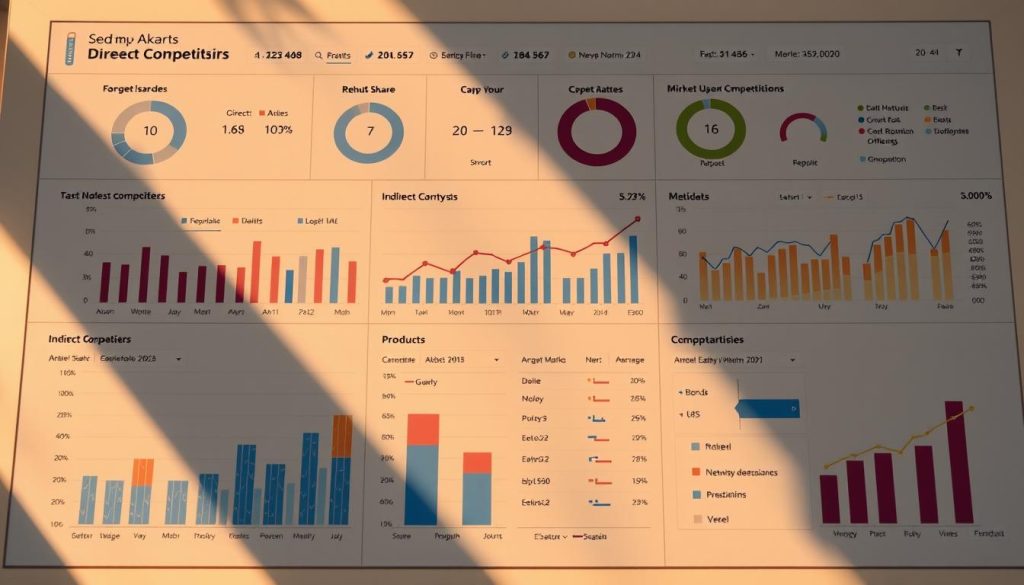
Understanding this distinction helps prioritize your research efforts. Both types of competitors influence your business strategy.
Using Search and Social Insights
Start by searching for your product or service on Google. The top results typically reveal your main direct competitors.
Expand your search to social media platforms and review sites. These channels show which companies customers actually discuss and compare.
This research provides real-world insights into your competitive landscape. It reveals both established players and emerging threats.
Gathering Data and Conducting Research
The foundation of strategic decision-making lies in collecting reliable data through systematic research methods. This process involves two main approaches that work together to build a complete picture.
Primary Research Techniques
Primary research gathers fresh information directly from the source. This includes purchasing rival products to test quality and features firsthand.
Interviewing current and potential customers reveals why they choose certain brands. Surveys and focus groups provide deeper insights into customer preferences.

Leveraging Secondary Sources
Secondary research analyzes existing information from public sources. Examining competitors’ websites reveals their marketing strategies and customer engagement.
Industry reports and company records offer valuable market intelligence. Specialized tools like Ahrefs provide SEO metrics and website performance data.
Following these competitor analysis techniques ensures ethical and effective data collection. Proper documentation makes findings actionable for business growth.
Analyzing Competitors’ Product Features and Services
Deep product comparison provides the roadmap for differentiation and competitive advantage. This evaluation examines every aspect of rival offerings to understand their market appeal.
Create a detailed matrix comparing core functionality, design, and user experience. Assess materials, durability, and customer support quality. This reveals which features customers truly value.
Comparing Pricing Models and Quality
Pricing strategy communicates brand positioning and target audience. Examine whether companies use freemium, tiered, or subscription models. Premium pricing signals quality while budget options target cost-conscious shoppers.
Dollar Shave Club studied razor market leaders charging $15-$20 for unnecessary features. They introduced a $1 monthly subscription with essential functionality only. This strategic competitive analysis identified a gap that led to rapid scaling.
Quality assessment goes beyond specifications to real-world performance. Review customer feedback, return rates, and warranty terms. These indicators show company confidence in their product service offerings.
Effective comparison identifies where your company can deliver superior value. It transforms feature lists into actionable insights for product development and market positioning.
Using Competitor Analysis to Outperform Your Competition
Successful businesses don’t just study rivals—they leverage gaps to create superior value. This approach transforms market intelligence into tangible advantages that drive growth.
Effective comparison templates organize complex data into clear visual formats. Feature charts and positioning maps make strategic decisions accessible across teams.
Building Effective Comparison Templates
Create frameworks that highlight where others fall short. Look for service gaps, user experience friction, or underserved customer segments.
WordStream dominated keyword research with free tools and educational content. A savvy player studied this winning formula, then improved functionality and clarity. Their enhanced approach generated a 626% traffic increase.
Cirque du Soleil identified an audience traditional circuses ignored. They created a premium theatrical experience for adults, ultimately outperforming legacy shows.
White Stuff analyzed checkout processes against similar retailers. They discovered their three-step flow was clunky compared to competitors’ single-page systems. Streamlining to one page boosted conversions by 37%.
These examples show how systematic evaluation reveals white space opportunities. The goal is continuous improvement, not imitation—enhancing what works while addressing unmet needs.
Leveraging SWOT Analysis for Strategic Decisions
A powerful analytical tool helps businesses systematically evaluate their position relative to market conditions. The SWOT analysis framework organizes intelligence into four clear categories.
This approach transforms complex data into actionable business strategy. It provides deep insight into both internal capabilities and external factors.
Highlighting Strengths and Weaknesses
Internal assessment identifies what your company does well. These strengths might include brand reputation or proprietary technology.
Honest evaluation also reveals areas needing improvement. Addressing these weaknesses creates opportunities for growth.
« Understanding your organizational capabilities is the first step toward sustainable advantage. »
Identifying Opportunities and Threats
External factors present potential growth avenues. Market gaps and emerging trends represent significant opportunities.
Threats include new market entrants or changing customer preferences. Proactive planning helps mitigate these risks.
| Category | Internal Factors | External Factors |
|---|---|---|
| Positive | Strengths | Opportunities |
| Negative | Weaknesses | Threats |
Domino’s demonstrated the power of this approach in 2024. Their SWOT analysis identified menu limitations and geographic dependence as key weaknesses.
They capitalized on international expansion and digital ordering opportunities. This strategic move drove significant sales growth across markets.
Implementing Findings into Your Marketing Strategy
Turning market intelligence into concrete action separates thriving businesses from stagnant ones. Your research reveals opportunities, but implementation drives real growth. This phase transforms observations into measurable improvements across your entire operation.
Effective execution requires prioritizing insights that align with your company’s capabilities. Focus on changes that deliver the greatest impact for your target customers.
Developing Actionable Business Plans
Start by identifying gaps in rivals’ offerings where your brand can excel. Consider unique product features or service enhancements that address unmet customer needs. A strong value proposition clearly communicates why your solution stands out.
Review your pricing strategy against market leaders. Can you offer better value while maintaining healthy profit margins? Sometimes small adjustments significantly boost sales performance.
« The best strategies emerge from understanding what customers want but aren’t getting from current options. »
Examine competitors’ websites and social media presence for improvement opportunities. Where do they engage audiences effectively? More importantly, which channels do they neglect entirely?
Create a 90-day action plan focusing on 2-3 high-impact initiatives. Assign clear ownership and track progress weekly. This approach ensures your marketing strategies deliver tangible results rather than remaining theoretical concepts.
Regularly measure performance against your goals. Adjust tactics based on customer feedback and market response. Continuous refinement keeps your business ahead in a dynamic landscape.
Conclusion
A systematic approach to understanding your market landscape transforms raw data into a powerful strategic advantage. This disciplined process should become a regular part of your business rhythm.
Schedule your competitive analysis quarterly or semi-annually to catch market shifts early. New players and changing tactics require constant monitoring.
The real value comes from turning insight into action. Use what you learn to strengthen your brand and improve customer experiences.
Remember that this is not a one-time exercise. Continuous improvement keeps your business ahead in dynamic markets. Make competitor intelligence a core part of your growth strategy.
Start implementing these frameworks today. Regular assessment and quick adaptation create sustainable advantage that separates leaders from followers.
FAQ
What is the main goal of conducting a market landscape review?
The primary objective is to gain a clear understanding of the industry environment. This process helps businesses identify key players, market trends, and customer preferences. It provides the foundational insight needed to make informed strategic decisions.
How do I differentiate between direct and indirect rivals?
Direct rivals offer similar products or services to the same target audience. Indirect contenders solve the same customer problem but with a different solution. For example, a movie theater and a streaming service are indirect rivals in the entertainment space.
What are effective methods for gathering information on other brands?
Effective techniques include analyzing their websites, social media channels, and customer reviews. You can also use tools like SEMrush or Ahrefs for digital performance data. Attending industry events and reviewing public financial reports are also valuable methods.
Why is a SWOT framework important for strategic planning?
The SWOT framework organizes findings into Strengths, Weaknesses, Opportunities, and Threats. This structure provides a balanced view of your own and other companies’ positions. It turns raw data into actionable intelligence for building a superior business strategy.
How can I use this research to improve my marketing plans?
The findings should directly influence your marketing strategy. You can identify gaps in the market, refine your unique selling proposition, and adjust your messaging. This ensures your campaigns are more targeted and effective against other players.
What common mistakes should I avoid during this process?
Avoid focusing only on the largest players and ignoring emerging threats. Do not collect data without a clear plan for how to use it. Also, ensure your research is ongoing, not a one-time event, to keep up with a dynamic market.