
The professional world is changing. The rigid 9-to-5 office structure is giving way to more adaptable and human-centered models. Today’s talented individuals thrive when given trust and autonomy over their careers.
We understand that you seek more than just a position. You desire the freedom to shape your professional journey while maintaining essential stability. This evolution in how we work benefits both professionals and the companies they serve.
Umalis stands at the forefront of this transformation. We provide a secure pathway for independent professionals. Our approach combines the autonomy you seek with a protective framework, ensuring that freedom does not come at the cost of security or growth.
This guide explores how Umalis bridges the gap between traditional employment constraints and the liberty of independent work. Discover how our comprehensive support system, detailed further in our guide on Umalis empowering job autonomy, facilitates a successful and stable independent career.
Table of Contents
Key Takeaways
- The traditional work model is evolving towards more adaptable arrangements.
- Modern professionals value autonomy and control over their careers.
- Umalis provides a secure framework for independent work.
- Our solution balances professional freedom with essential stability.
- This shift benefits both individual professionals and their clients.
- Comprehensive support is key to a successful independent career.
Understanding the Concept of Workplace Flexibility
Modern career structures now prioritize individual needs alongside organizational requirements. This balanced approach represents a fundamental shift in professional engagement.
Definition and Core Principles
Workplace flexibility empowers professionals to choose where, when, and how they accomplish their responsibilities. This framework respects personal circumstances while maintaining productivity standards.
The core principles center on trust, autonomy, and results-oriented evaluation. Different professionals thrive under varied conditions, and successful implementation benefits both individuals and organizations.
Modern Work Environments
Today’s work environment has evolved beyond traditional office settings. Distributed teams and hybrid models blend physical and virtual collaboration spaces.
Technology enables seamless cooperation across locations and time zones. Geographical boundaries become less relevant to productive work outcomes.
True adaptability requires rethinking performance metrics and communication protocols. When professionals control their schedule within reasonable parameters, they demonstrate higher engagement and commitment.
This comprehensive approach to work flexibility creates arrangements where everyone benefits from increased adaptability.
The Evolution of Job Flexibility in Today’s Work Culture
What was once considered unconventional has now become mainstream in contemporary professional settings. The journey from rigid office structures to adaptable arrangements represents one of the most significant transformations in modern business.
Historical Perspective and Business Shifts
We’ve observed a gradual transition from industrial-age rigidity to information-age adaptability. This shift accelerated dramatically through technological advancement and recent global events.
Business transformations toward knowledge work and digital collaboration fundamentally altered how we measure productivity. Physical presence became less critical to output quality in many sectors.
From Perk to Strategic Necessity
Organizations now compete on the quality of their workplace flexibility offerings. What companies once viewed as exceptional accommodation has become a standard expectation.
Talented professionals increasingly prioritize autonomy in their career choices. This evolution reflects deeper changes in workforce demographics and generational expectations.
The power dynamic in professional relationships has shifted significantly. Professionals now enjoy greater agency over their work engagement terms.
Key Benefits of Flexible Work Arrangements
Research consistently demonstrates that adaptable professional models yield significant benefits across the board. Both professionals and organizations experience tangible improvements when implementing thoughtful approaches to work structure.
Advantages for Employees
For professionals, these arrangements deliver measurable reductions in stress levels. Studies confirm a 20% decrease in job-related anxiety among those with schedule control.
You’ll experience enhanced employee satisfaction and improved mental well-being. The ability to manage personal commitments alongside professional responsibilities creates genuine better work-life balance.
Practical benefits include eliminating commute time and working during peak productivity hours. This autonomy fosters innovation and skill development without career sacrifice.
Benefits for Employers
Organizations gain substantial advantages from implementing flexible work arrangements. Research shows remote professionals achieve 13% higher productivity with significantly lower attrition rates.
Companies benefit from 41% reduced absenteeism and 21% improved profitability. These structures serve as powerful tools for attracting top talent in competitive markets.
The financial advantages include lower real estate costs and decreased recruitment expenses. This creates a virtuous cycle where satisfied professionals deliver superior results.
Examples of Flexible Work Models
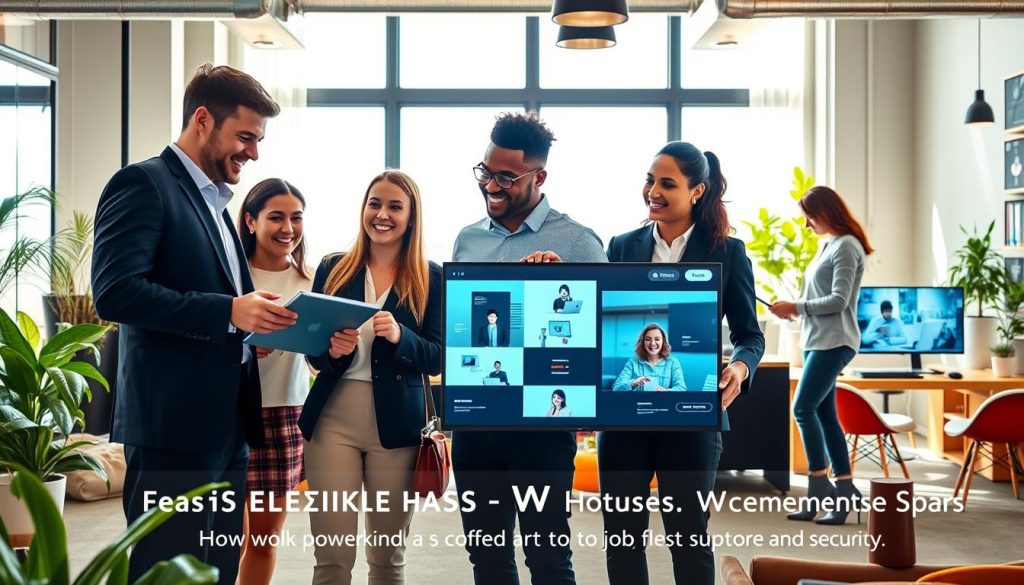
Today’s workforce benefits from an array of structural options that redefine traditional office expectations. These innovative approaches allow professionals to customize their engagement based on personal needs and work requirements.
Remote, Hybrid, and Distributed Approaches
Remote work enables complete location independence. Professionals can operate from home, co-working spaces, or any internet-connected environment.
Hybrid work combines office presence with remote days. This balanced model preserves team collaboration while offering schedule control.
Distributed teams span multiple locations and time zones. This approach taps into global talent pools and supports continuous operations.
Shared Roles and Reduced Schedules
Job sharing divides one full-time position between two professionals. Each person works part-time with coordinated schedules for seamless continuity.
Part-time roles maintain professional engagement with reduced hours. This supports education, caregiving, or transitional career phases.
Compressed schedules complete standard weekly hours in fewer days. Many professionals work four ten-hour days instead of five eight-hour shifts.
Optimizing Job Flexibility with Smart Tools
Technology has become the backbone of modern professional arrangements. The right digital infrastructure transforms ambitious workplace flexibility concepts into practical, daily reality.
These solutions help distributed teams maintain cohesion and high productivity. They bridge physical distances and varied schedules effectively.
The Role of Workplace Technology
We see technology as the essential framework that enables true autonomy. It provides the structure needed for successful flexible work.
Video platforms like Zoom and Microsoft Teams replicate the nuance of in-person meetings. This preserves team relationships and meeting effectiveness.
Collaboration tools such as Trello and Google Drive create transparent, shared digital workspaces. Everyone stays aligned on tasks and progress, regardless of location.
Leveraging Apps and Scheduling Software
Specialized apps address the unique challenges of hybrid models. Workplace management software optimizes office space use based on real data.
Automation handles repetitive administrative tasks with precision. This frees employees for strategic thinking and creative problem-solving.
The right combination of tools helps organizations evaluate results rather than mere presence. This shift is fundamental to sustainable flexibility.
| Tool Category | Primary Function | Example Platforms | Key Benefit |
|---|---|---|---|
| Communication | Virtual meetings & instant messaging | Zoom, Microsoft Teams | Maintains team cohesion |
| Collaboration | Project tracking & document sharing | Asana, Google Drive | Ensures workflow transparency |
| Workplace Management | Space booking & analytics | deskbird | Optimizes hybrid office use |
| Automation & AI | Handles routine tasks | Various AI schedulers | Increases strategic focus |
Choosing the right tools is a strategic decision. It directly impacts whether workplace flexibility enhances or hinders productivity.
These technologies empower employees to do their best work. They provide the support system needed for a successful modern career path.
Enhancing Better Work-Life Balance Through Flexibility
Achieving harmony between professional responsibilities and personal life represents a fundamental goal for today’s workforce. We understand that true satisfaction comes from integrating career success with personal well-being.
Modern arrangements transform the concept of work-life balance from aspiration to daily reality. Research shows remote professionals report higher satisfaction levels, benefiting from regained commute time and reduced stress.
Flexitime and Compressed Workweeks
Flexitime arrangements give you control over your daily schedule. You can align work hours with your natural energy patterns and family needs.
Compressed schedules allow completing standard weekly hours in fewer days. Many professionals work four ten-hour days instead of five eight-hour shifts, gaining valuable personal time.
| Arrangement Type | Weekly Structure | Primary Benefit | Ideal For |
|---|---|---|---|
| Flexitime | Variable start/end times | Personal schedule control | Family responsibilities |
| Compressed Week | 4 longer days | Extra day off weekly | Extended personal time |
| Staggered Hours | Different team schedules | Reduced peak-hour stress | Commute optimization |
| Hybrid Flex | Mix of office/remote | Balanced social contact | Social connection needs |
Time Management Techniques for Personal Commitments
Effective planning becomes powerful when combined with schedule control. You can reserve peak productivity periods for focused work while managing personal commitments during lower-energy times.
This approach reduces tension between professional and personal responsibilities. Employees gain the ability to attend important events without career penalty, creating genuine work-life balance.
Navigating Challenges in Flexible Work Environments
While the benefits of adaptable professional models are clear, implementing them successfully requires addressing specific operational challenges. We recognize that distributed teams face unique hurdles that demand thoughtful solutions.
Communication gaps can emerge when team members operate from different locations. These misunderstandings may delay responses and affect workflow efficiency.
Communication and Coordination Issues
Coordination becomes more complex across various time zones and schedules. This can create delays in decision-making and project progression.
Cultural connection requires extra effort when professionals rarely meet in person. Some remote employees may feel less connected to organizational goals.
Clear communication protocols form the foundation of successful flexible work arrangements. Establishing response time expectations prevents misunderstandings.
Strategies to Build Trust in Remote Teams
Building trust requires conscious effort in distributed environments. Visible presence no longer serves as a reliable commitment indicator.
Regular synchronous touchpoints help maintain interpersonal connections. Video meetings and virtual check-ins preserve company culture.
Transparency tools help team members stay connected to collective progress. Shared visibility systems show how individual contributions align with broader objectives.
Successfully navigating these challenges requires leadership commitment to building trust. It involves cultivating workplace culture that values outcomes over presenteeism.
Practical Tips for Implementing Flexible Work Models

Implementing flexible professional models begins with a comprehensive assessment of role adaptability and communication needs. This strategic approach ensures a smooth transition while maintaining organizational effectiveness.
Steps for a Smooth Transition
We recommend starting with a thorough evaluation of which positions can adapt to different work arrangements. Roles with measurable outcomes typically transition most successfully.
Begin with pilot programs in specific departments rather than immediate company-wide implementation. This allows you to identify challenges early and refine your approach before broader rollout.
| Phase | Key Activities | Timeline | Success Metrics |
|---|---|---|---|
| Assessment | Role analysis, communication audit | 2-4 weeks | Identified adaptable positions |
| Pilot Testing | Department implementation, manager training | 6-8 weeks | Employee satisfaction, productivity |
| Full Rollout | Company-wide implementation, policy refinement | 3-6 months | Overall effectiveness, retention rates |
Customizing Policies to Fit Individual Needs
A successful approach requires tailoring policies to individual circumstances rather than applying uniform solutions. Different roles and personal situations benefit from varied flexibility configurations.
Involve employees directly in designing work arrangements, as they understand what enhances their productivity. For professionals considering independent work, tools like the Umalis revenue simulator help understand financial implications and plan transitions confidently.
Regular evaluation ensures your workplace policies evolve with changing organizational needs. This continuous refinement maintains effective flexibility over time.
The Role of Leadership in Fostering Workplace Flexibility
The success of distributed teams hinges directly on management capabilities adapted for contemporary professional environments. Leadership commitment represents the most critical factor determining whether workplace flexibility succeeds or fails within organizations.
Manager Training and Empowerment
Traditional management approaches based on visible presence become counterproductive in flexible settings. Effective training must address the psychological transition from control-oriented oversight to trust-based empowerment.
Leaders need new competencies around asynchronous communication and virtual team building. These skills differ significantly from traditional in-person management methods.
Cultivating a Culture of Autonomy and Trust
Building trust requires managers to demonstrate confidence in team members’ commitment and capability. This approach resists micromanagement impulses that undermine autonomy.
Genuine empowerment means allowing employees to make decisions about their work approach and schedule. Organizations that invest in leadership development see better outcomes in talent retention and satisfaction.
| Competency Area | Traditional Approach | Flexible Approach | Key Benefit |
|---|---|---|---|
| Performance Evaluation | Hours worked, visible presence | Results achieved, outcomes delivered | Focuses on productivity |
| Communication Style | Synchronous, in-person meetings | Asynchronous, varied channels | Respects different schedules |
| Team Connection | Office-based interactions | Virtual culture cultivation | Maintains cohesion remotely |
| Trust Building | Direct supervision | Autonomy with support | Enhances employee engagement |
The leadership approach to workplace flexibility signals organizational values. It shows whether companies truly trust employees or merely tolerate flexibility while preferring traditional arrangements.
Job Flexibility: Real-World Insights and Strategies
Practical case studies from diverse sectors demonstrate how organizations effectively balance autonomy with productivity. These real-world examples provide valuable lessons for successful implementation.
Case Studies from Various Industries
Microsoft’s hybrid approach shows how large technology firms manage adaptable work environments. Their employees can choose between office and working home locations.
The results are impressive: 92% of staff feel valued for their autonomy, while 93% report effective collaboration regardless of location. Stanford research confirms that remote work delivers 13% higher productivity with 50% lower attrition.
Lessons Learned and Best Practices
Successful companies share common elements in their arrangements. Clear policies and robust technology infrastructure form the foundation of effective flexible work.
Best practices include pilot testing before full rollout and involving employees in designing their work structures. This thoughtful approach to work flexibility ensures sustainable success across diverse organizational contexts.
Advanced Tactics for Sustaining Workplace Flexibility
Advanced organizations understand that workplace flexibility demands continuous evolution to remain effective. What succeeds today may need adjustment tomorrow as business conditions and employee expectations evolve.
We recommend establishing systematic processes for gathering feedback and measuring outcomes. This ensures your approach remains aligned with both organizational goals and team needs.
Continuous Feedback and Policy Refinement
Regular employee input is essential for refining work arrangements. Use surveys, focus groups, and individual discussions to understand what functions well across different roles.
Review policies annually based on accumulated data and changing conditions. This adaptive approach helps workplace flexibility meet diverse needs effectively over time.
Measuring Long-Term Benefits and ROI
Track specific metrics around productivity, engagement, and retention. Quantitative assessment shows whether flexible work delivers anticipated benefits to both employees and the company.
Measure return on investment by evaluating hard costs like real estate savings alongside softer benefits such as improved innovation. Successful companies balance consistency with adaptability in their workplace flexibility programs.
Continuous improvement ensures your arrangements evolve with workforce demographics and technological capabilities. This prevents policies from becoming static and losing relevance.
Conclusion
The contemporary professional landscape has reached a pivotal moment where autonomy and security converge. We’ve explored how modern work models transform traditional arrangements, creating value for both professionals and organizations.
The evidence clearly shows that adaptable approaches deliver measurable benefits. These include improved work-life balance, higher satisfaction, and enhanced productivity across diverse teams and locations.
For professionals seeking both independence and protection, Umalis provides the essential bridge. Our unique framework combines the freedom of independent work with institutional security, eliminating the traditional trade-off.
You can begin your journey by exploring our comprehensive approach at en.umalis.fr and using our revenue simulator to plan your transition. This empowers you to design a career that truly meets your individual needs while maintaining professional growth.
FAQ
What are the most common types of flexible work arrangements available today?
Modern organizations offer various models to meet diverse needs. These include remote work, where team members operate from different locations, and hybrid models that blend office and home-based days. Other popular arrangements are compressed workweeks, which fit hours into fewer days, and job sharing, where two people share one full-time role. These options help companies attract top talent and benefit employees seeking better work-life balance.
How can flexible work models improve employee satisfaction and productivity?
When companies offer adaptable work arrangements, they demonstrate trust and respect for individual needs. This autonomy often leads to higher morale and engagement. Employees can manage personal commitments more effectively, reducing stress. This supportive work environment frequently results in sustained productivity and helps organizations retain valuable team members by providing a better work-life experience.
What tools and strategies help teams stay connected in flexible work environments?
Effective communication is vital for success. Teams use collaboration platforms like Slack and project management software such as Asana to coordinate tasks. Regular video check-ins and clear communication protocols build trust and ensure alignment. Establishing core hours when everyone is available helps maintain cohesion. These tools help bridge physical distance, fostering a strong company culture even when working from different locations.
How should employers approach implementing flexible work policies?
A successful transition begins with understanding team members’ unique situations. Start with a pilot program and gather continuous feedback. Customize policies to fit various roles rather than applying a one-size-fits-all approach. Provide manager training on leading distributed teams effectively. Focus on outcomes rather than hours logged. This thoughtful implementation allows companies to refine their approach based on real-world experience.
What are the key benefits for employers who adopt workplace flexibility?
Organizations gain significant advantages, including access to a broader talent pool unrestricted by geography. Flexible work arrangements often lead to lower overhead costs for office space. Companies that support better work-life balance typically see reduced turnover and higher employee loyalty. This modern approach also enhances an organization’s reputation, making it more attractive to top talent who value autonomy and trust-based work models.