

The modern professional landscape is shifting. Traditional long-term employment is giving way to flexible, time-bound engagements. For independent professionals in France, this change brings both immense opportunity and new challenges.
We understand you need reliable systems to thrive. This guide provides the practical tools and reassuring frameworks to manage your assignments successfully. You will learn to define scope, set clear objectives, and deliver exceptional results consistently.
Consider Claire, a graphic designer in Paris. She transformed a last-minute request into a steady six-month retainer by establishing tight parameters. Her story shows how the right approach creates stability.
Our goal is to help you build a sustainable career. We combine professional expertise with practical support. You can develop your mastery of project management to minimize disputes and avoid common pitfalls like scope creep.
With the right strategies, you can navigate project-based work with true confidence. This transforms potential uncertainty into predictable, profitable processes.
Table of Contents
Key Takeaways
- The business environment increasingly favors project-based engagements over traditional employment.
- Independent professionals need specific systems to manage these assignments effectively.
- Clear scope definition and communication are foundational to success.
- Practical tools can transform uncertainty into predictable, stable workflows.
- Adopting proven strategies helps avoid common pitfalls and builds a strong professional reputation.
- Mastering these skills leads to long-term career stability in the French market.
Introduction to Project-Based Work
Today’s economic landscape favors temporary, focused collaborations over permanent employment. This approach centers on specific initiatives with defined timelines and measurable outcomes.
We help you understand this fundamental shift in professional engagement. Unlike traditional roles, these assignments have clear start and end points.
| Characteristic | Traditional Employment | Project-Based Engagements |
|---|---|---|
| Duration | Ongoing, indefinite | Time-bound, specific timeline |
| Scope | Broad responsibilities | Clearly defined deliverables |
| Skills Required | General competency | Specialized expertise |
Project-based arrangements demand precise scope definition and objective-driven results. These engagements typically require specialized skills for specific challenges.
Your adaptability becomes a crucial advantage in this environment. This model offers the flexibility many professionals seek while maintaining control over their career trajectory.
Understanding the Fundamentals of Project-Based Work
Every successful project rests on a foundation of three core elements: objectives, scope, and deliverables. These components create a clear framework for your engagement.
In business terms, a project is a temporary endeavor. It has a defined beginning and end. The goal is to create a unique product, service, or result.
This contrasts sharply with ongoing roles that have continuous responsibilities. Understanding this distinction is crucial for how you plan and price your services.
| Characteristic | Ongoing Role | Defined Project |
|---|---|---|
| Timeframe | Indefinite, continuous | Fixed start and end dates |
| Success Measure | Ongoing performance | Meeting specific objectives |
| Final Result | Maintained operations | Tangible deliverables |
Success is measured against agreed-upon outcomes, not just effort expended. This focus on results ensures value for both you and your client.
Major achievements like the iPhone development demonstrate these principles. Clear scope management and precise skill coordination were essential.
We provide a mental model to frame your services as bounded initiatives. This approach reduces misunderstandings and protects your professional capacity.
Key Benefits for Freelancers and Independent Professionals
Modern business dynamics have created a fertile environment for professionals seeking autonomy and variety. This approach offers substantial benefits that can transform your career trajectory.
Independent professionals gain remarkable control over their schedules and project selection. You can choose assignments that align with your personal priorities and professional goals.
| Aspect | Primary Benefits | Common Challenges |
|---|---|---|
| Career Growth | Rapid skill development across diverse industries | Income gaps between assignments |
| Work-Life Balance | Complete scheduling flexibility | Potential isolation from reduced collaboration |
| Professional Development | Portfolio building with measurable results | Scope creep affecting profitability |
These benefits empower freelancers to accelerate their growth. You encounter varied challenges that sharpen your problem-solving skills.
The challenges are manageable with proper systems. Maintaining a consistent project pipeline through platforms like specialized freelancing sites ensures steady opportunities.
Successful freelancers develop strong technical skills while mastering business fundamentals. This balanced approach maximizes advantages while minimizing risks.
Planning and Initiating Your Project
Strategic groundwork during the initiation stage creates the foundation for predictable, successful results. We guide you through this critical phase where careful preparation determines whether your project will proceed smoothly or encounter preventable challenges.
Begin by collaborating closely with your client and key stakeholders. Thorough discussions help you understand their true needs, expectations, and constraints. This early engagement ensures everyone shares the same vision.
The planning process involves defining clear objectives and establishing precise scope boundaries. Document these elements in a concise project charter that specifies what success looks like. This charter becomes your reference point throughout the engagement.
Conduct a practical feasibility assessment to evaluate technical, operational, and economic viability. Simultaneously, perform an honest risk analysis identifying potential budget limitations and resource constraints.
Secure necessary resources, approvals, and commitments before commencing any work. This disciplined approach protects your time and establishes mutual understanding with all stakeholders. It transforms potential uncertainty into controlled, professional execution.
Setting Clear Objectives, Scope, and Deliverables
The most effective safeguard against misunderstandings in professional engagements is a clearly defined project charter. This concise document transforms vague client requests into a solid operational foundation. It aligns expectations from the very beginning.
We guide you in articulating specific, measurable objectives. These define exactly what the engagement aims to achieve. This clarity ensures everyone works toward the same outcome.
Defining the scope with precision is equally critical. You must explicitly state what is included and, just as importantly, what is excluded. This creates essential boundaries.
| Documentation Element | Purpose | Impact |
|---|---|---|
| Objectives | Defines the primary goal | Aligns all parties on the desired result |
| Scope (In/Out) | Sets clear boundaries | Prevents unauthorized expansion of work |
| Deliverables & Acceptance | Specifies tangible outputs | Creates objective completion criteria |
Establish detailed acceptance criteria for each of your deliverables. Specify review cycles, approval steps, and quality standards. This tells everyone what « done » means.
Document key assumptions about resource availability and client response times. Making these expectations explicit prevents future disputes. This disciplined approach protects your time and profitability.
Creating a Comprehensive Project Plan
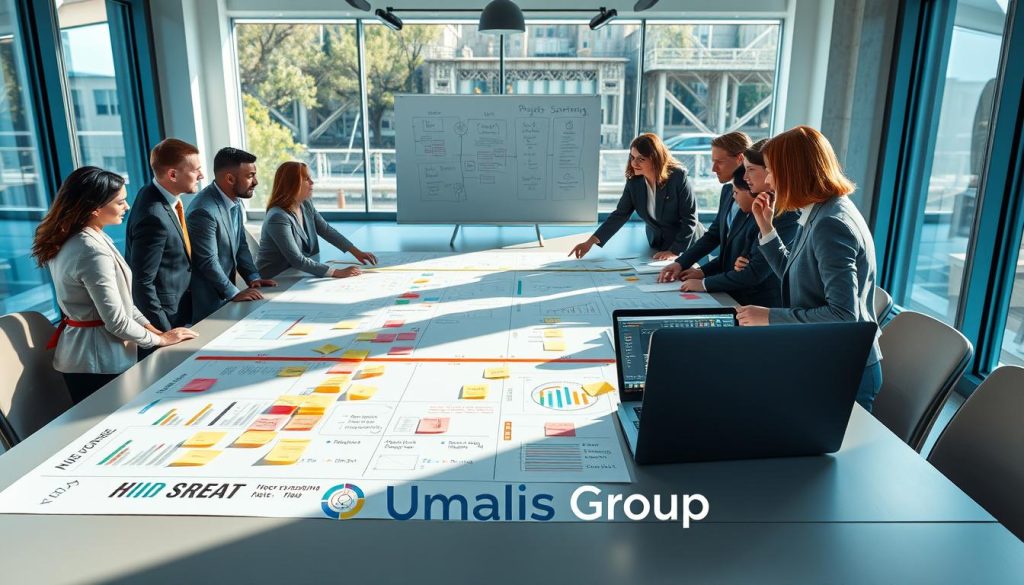
A well-structured plan transforms ambitious goals into achievable steps. Your project plan serves as a detailed roadmap for successful delivery. It outlines all necessary tasks, timelines, and resources.
We guide you through breaking complex initiatives into manageable tasks. This process includes assigning clear responsibilities and realistic effort estimates. Each component becomes concrete rather than overwhelming.
“Plans are nothing; planning is everything.”
Developing Timelines and Budgets
Realistic timelines account for more than just active work time. They include administrative overhead, client review cycles, and inevitable delays. This honest approach protects your schedule and reputation.
Budget development requires thorough cost estimation. Consider both direct expenses and indirect costs like software subscriptions. Always include a contingency buffer for unforeseen circumstances.
| Planning Component | Key Considerations | Professional Impact |
|---|---|---|
| Task Breakdown | Discrete activities with clear owners | Makes execution systematic |
| Milestones | Major progress markers | Provides motivation and checkpoints |
| Dependencies | Tasks requiring completion first | Prevents workflow bottlenecks |
Assessing Risks and Feasibility
Honest risk assessment identifies potential challenges before they arise. Evaluate technical constraints, resource availability, and client responsiveness. Develop mitigation strategies for each identified risk.
Visual tools like Gantt charts make your plan accessible to all stakeholders. They effectively communicate progress and help maintain alignment. This comprehensive approach dramatically increases your likelihood of successful, profitable delivery.
Identifying Roles and Responsibilities in Project-Based Work
Effective coordination begins with unambiguous definition of who does what. Even as an independent professional, you rarely work entirely alone. You coordinate with clients, subcontractors, vendors, and other parties whose roles must be explicitly defined.
This clarity prevents common dysfunctions like unclear ownership or duplicated efforts. When each task has a named owner, decisions accelerate and disputes decrease significantly.
Defining Team Roles and Responsibilities
Assembling the right team involves matching expertise to specific deliverables. You need to specify not just what people do but also their decision-making authority and accountability.
Clearly document who is responsible for each action, who has approval authority, and who should be consulted or informed. This eliminates ambiguity that causes delays and conflicts throughout the engagement.
Engaging Stakeholders Effectively
Identifying all key stakeholders early is critical for success. This includes decision-makers, end-users, influencers, and anyone with vested interests in outcomes.
Understanding their expectations, concerns, and preferred communication styles enables effective engagement. Establish regular touchpoints that keep them informed, involved, and supportive of your initiatives.
This disciplined approach to roles and responsibilities creates the collaborative foundation essential for complex project success. It builds accountability and speeds decision-making across your team.
Effective Communication Strategies for Successful Projects
Professional success often hinges not just on technical skills, but on the quality of information exchange between all parties involved. We recognize that clear communication prevents the misunderstandings that can derail even well-planned initiatives.
Establishing Clear Communication Channels
Your first step involves creating purpose-specific channels for different types of information. Designate separate pathways for formal decisions, regular progress updates, and urgent issues requiring immediate attention.
Select appropriate tools like Slack for quick coordination and email for formal notices. Your project management software should serve as the single source of truth. This structured approach ensures your team and clients always know where to find critical information.
Implementing Regular Status Updates
Consistent reporting keeps all stakeholders aligned and informed. We recommend a simple three-line format: what was completed, what obstacles exist, and what decisions are needed.
These regular updates build trust and surface problems early. Maintain meeting notes and a decision log to prevent disputes. Effective communication strategies transform potential confusion into collaborative clarity throughout your engagements.
Managing and Preventing Scope Creep
One of the most significant threats to your profitability as an independent professional comes from uncontrolled scope expansion. Scope creep occurs when small additional requests accumulate into substantial unpaid effort. This gradual erosion of boundaries can undermine your timeline and financial stability.
Recognize that scope creep often begins innocently. A client may request « quick changes » that seem reasonable individually. Without clear boundaries, these accumulate and transform your engagement beyond its original parameters.
We provide a professional workflow for managing changes. When a client requests additions beyond defined scope, document the request thoroughly. Assess its impact on timeline and resources, then propose adjusted terms with written confirmation.
Clear communication maintains positive relationships while protecting your interests. Reference your agreed charter factually, explaining how requested adjustments affect deliverables and costs. This approach demonstrates professionalism rather than rigidity.
Establishing precise acceptance criteria for each of your deliverables prevents endless revisions. Proper scope management ensures fairness and sustainability. It’s essential for effective client relationship management throughout your engagements.
Utilizing Tools and Software for Efficient Project Management

Modern professionals rely on specialized applications to coordinate efforts and maintain visibility across all project components. The right technological framework eliminates administrative friction, allowing you to focus on high-value delivery rather than chasing updates.
We guide you in selecting software that provides essential functionality. Look for platforms offering task tracking with clear ownership, visual timelines, and dependency mapping. These features create a centralized system for all stakeholders.
« Efficiency is doing better what is already being done. »
Effective management requires tools that serve as a single source of truth. Platforms like Asana for task organization or Trello for visual workflows prevent confusion from scattered communications. Dashboards provide real-time progress visibility.
| Tool Category | Primary Function | Recommended Platforms |
|---|---|---|
| Task Management | Organizing and tracking deliverables | Asana, Trello, Monday.com |
| Communication | Team coordination and updates | Slack, Microsoft Teams |
| Document Storage | Centralized file access | Google Drive, Dropbox |
Implement templates within your chosen software to accelerate setup. Standardized processes ensure consistency across engagements while reducing administrative overhead. Provide adequate training to maximize adoption.
This strategic approach to project management transforms potential chaos into controlled execution. The right tools empower you to deliver exceptional results consistently.
Strategies for Order Management and Procurement
Procurement delays represent one of the most common yet preventable causes of timeline disruptions in professional engagements. We help you understand that effective management of orders ensures smooth operations and timely delivery of outcomes.
Establish a centralized system for tracking every purchase. This could be dedicated procurement software or a shared spreadsheet. Record essential details like order owner, vendors, cost estimates, and expected delivery dates.
Define clear procedures for placing, reviewing, and approving orders. Specify approval levels for different expenditure thresholds. This disciplined approach prevents budget overruns and maintains financial control.
| Tracking Method | Best For | Key Benefits |
|---|---|---|
| Spreadsheet System | Smaller engagements | Low cost, easy implementation |
| Procurement Software | Complex projects | Automated alerts, integration |
| Hybrid Approach | Growing businesses | Scalability, customization |
Maintain updated inventory visibility for both physical materials and digital resources. Conduct weekly reviews to identify potential shortages before they become critical. This proactive management prevents last-minute crises.
Establish strong relationships with reliable vendors. Research suppliers thoroughly and negotiate favorable terms. Professional communication facilitates problem-solving when delivery issues arise.
Align your procurement schedule with project milestones. Ensure critical materials arrive with adequate buffer time. This strategic approach to project-based work demonstrates professionalism and strengthens client confidence.
Monitoring and Controlling Project Progress
Maintaining consistent oversight throughout your engagement transforms uncertainty into predictable execution. We guide you in establishing systematic monitoring that keeps your initiative aligned with planned outcomes. This disciplined approach surfaces potential issues early when they’re easiest to resolve.
Tracking Milestones and Deliverables
Effective progress tracking requires measurable criteria for each milestone. Use completion percentages, test results, or formal sign-offs to make advancement objective. This systematic approach prevents subjective assessments.
Establish weekly checkpoints to review completed work against planned timelines. Identify any variances requiring corrective action immediately. Regular monitoring maintains stakeholder confidence through visible progress.
Create a concise risk register listing potential issues, their probability, and impact. Update this weekly to catch problems before escalation. This proactive monitoring gives you command of engagement dynamics.
Implementing Quality Control Checkpoints
Implement quality control at key milestones through internal reviews and client validations. These checkpoints ensure deliverables meet standards before moving forward. This protects your reputation and prevents expensive rework.
When scope or resources change, adjust your plan transparently. Document modifications and obtain stakeholder approval for revised terms. This disciplined approach demonstrates professionalism that builds long-term relationships.
Maintain short, factual status updates communicating accomplishments, obstacles, and needed decisions. Consistent monitoring and quality checks transform potential challenges into controlled execution.
Adapting Through Continuous Learning and Flexibility
The accelerating pace of technological advancement requires professionals to embrace learning as a continuous journey. We recognize that your ability to adapt and grow determines long-term success in this evolving landscape.
According to PwC research, 70% of executives expect AI to redefine professional roles. This makes your commitment to skills development a critical advantage. You must proactively identify gaps and invest in relevant training.
Each assignment presents unique challenges that expand your capabilities. View these engagements as opportunities for continuous learning. They expose you to different contexts and build a diverse portfolio.
Cultivate flexibility in your problem-solving approach. Remain open to alternative methods and client feedback. This adaptability helps you navigate unexpected challenges effectively.
True professional adaptability means responding to legitimate changes while maintaining boundaries. It involves learning from setbacks and refining processes. This balanced approach ensures sustainable growth.
Companies preferentially hire professionals who demonstrate both expertise and learning agility. Your commitment to continuous learning keeps you competitive regardless of market shifts. It transforms potential challenges into opportunities for development.
Securing Payments and Managing Financial Challenges
Clear payment structures eliminate the uncertainty that often plagues project engagements. We understand that reliable payments form the foundation of your professional stability.
Structure your pricing around concrete deliverables rather than vague time estimates. Fixed-fee arrangements work best when scope is well-defined. Alternatively, milestone-based payments align compensation with demonstrated progress.
Include specific terms in every contract: payment schedules tied to deliverables, acceptable payment methods, and late-payment penalties. Defined review windows prevent indefinite approval delays that impact your income flow.
Split project fees into multiple milestone payments rather than single end-of-engagement compensation. This approach improves cash flow and reduces financial risk while creating natural checkpoints.
Tools like Umalis Group’s income simulator help you calculate revenue potential across different scenarios. This supports better financial planning for each engagement.
Maintain a healthy project pipeline to minimize income gaps between assignments. Build cash reserves equivalent to 3-6 months of expenses. This disciplined approach to payments and terms creates true financial stability for sustainable professional work.
Building Stability with Predictable Processes and Systems
The transition from reactive freelancing to proactive professional practice requires systematic approaches. True stability emerges not from single contracts but from repeatable systems that create consistency across all engagements.
Develop standardized workflows for common activities like client onboarding and quality reviews. These predictable processes reduce cognitive load while increasing efficiency dramatically.
Document your successful approaches as templates and checklists. This transforms hard-won lessons into replicable systems that accelerate future projects. You don’t need to work harder—you need structure that protects your time and establishes professional boundaries.
| Stability Element | Implementation Method | Professional Impact |
|---|---|---|
| Standardized Workflows | Templates for common tasks | Reduces setup time by 40-60% |
| Portfolio Balance | Retainer clients + project work | Creates income predictability |
| Quality Systems | Documented review procedures | Ensures consistent delivery |
Establish a balanced portfolio with retainer clients providing baseline income. Complement this with project-based work for variety and skill development.
Professional support services like those from Umalis Group provide administrative infrastructure that creates stability beyond individual assignments. These systems liberate creative energy and enable sustainable success for independent professionals.
Conclusion
As we conclude this exploration of structured professional practice, you now possess a robust toolkit for navigating complex assignments with assurance. The insights and lessons shared throughout this guide provide a solid foundation for achieving consistent success in your project-based work.
You have gained practical strategies for defining clear objectives, managing scope effectively, and delivering exceptional outcomes. These approaches transform potential challenges into opportunities for professional growth. We stand ready to support your journey as trusted partners.
Implement these frameworks gradually, starting with scope definition and payment terms. For comprehensive support, explore Umalis Group’s services and use their income simulator to optimize your financial planning.
By applying these principles, you can approach each engagement with confidence, achieving both professional fulfillment and stability. Your path to mastering project-based work begins with these essential insights for sustainable success.
FAQ
How can I effectively prevent scope creep in my projects?
To prevent scope creep, start with a clearly defined scope statement agreed upon by all stakeholders. Use a formal change control process for any requested modifications. Regular communication and progress monitoring help ensure everyone stays aligned with the original objectives and deliverables.
What are the best strategies for defining roles and responsibilities within a project team?
Clearly defining roles and responsibilities is crucial for success. Utilize a RACI matrix (Responsible, Accountable, Consulted, Informed) to outline tasks and decision-making authority. This clarity prevents confusion, enhances accountability, and ensures every team member understands their contribution to the project’s outcomes.
Which project management software tools are most beneficial for freelancers?
Freelancers benefit from tools that offer flexibility and comprehensive features. Trello provides excellent visual task management, while Asana is great for tracking complex projects with multiple milestones. For time tracking and invoicing, Harvest integrates well. Choosing software that supports your specific workflow is key to efficient management.
Why is continuous learning important in project-based work?
Continuous learning allows professionals to adapt to new challenges and methodologies. By analyzing lessons from completed projects, you can refine your strategies and processes. This commitment to development enhances your skills, improves future project outcomes, and maintains your competitive edge in a dynamic market.
How can I ensure stable payments and manage financial challenges as a freelancer?
Secure payments by establishing clear contract terms, including payment schedules and milestones. Use professional invoicing software to send timely reminders. Building a financial buffer helps manage cash flow between projects. For larger engagements, consider requesting a deposit to mitigate risk and ensure financial stability.
What is the most effective way to track project progress and deliverables?
Implement a system for monitoring progress against key milestones. Use dashboards in tools like Monday.com or Smartsheet to visualize task completion and identify potential delays early. Regular status updates and quality control checkpoints keep the project on track and allow for timely adjustments if issues arise.