

For independent professionals in France, managing your operational costs is a fundamental part of success. These are the ordinary and necessary costs to run your venture effectively. Properly handling these items directly impacts your profitability and financial health.
This guide provides a clear path to understanding and optimizing your spending. We will explore which costs are considered deductible and how to categorize them correctly for maximum benefit. This knowledge is crucial for accurate budgeting and tax filing.
At Umalis France, we specialize in supporting freelancers with these financial complexities. Our goal is to help you navigate French regulations with confidence, ensuring compliance while maximizing your take-home income. Discover Umalis Group’s smart freelancer solutions designed for your stability.
You will learn actionable strategies to track and optimize your company’s spending without sacrificing quality. We cover everything from understanding essential costs to implementing systems that save time and reduce errors. With the right approach, managing your finances becomes straightforward, allowing you to focus on growing your activities securely.
Table of Contents
Key Takeaways
- Effectively managing operational costs is crucial for the profitability of independent professionals.
- Understanding deductible expenses is key to optimizing your financial situation and tax efficiency.
- Proper categorization of spending aids in accurate budgeting and correct tax filing.
- Umalis France provides expert support to navigate French financial regulations with ease.
- Implementing structured systems for expense management saves time and reduces errors.
- Optimizing your financial management allows you to focus on growing your professional activities with confidence.
Understanding Business Expenses and Their Impact
Understanding the distinction between different categories of operational spending empowers you to make informed financial decisions. This knowledge forms the bedrock of effective financial management for independent professionals.
Defining Ordinary and Necessary Costs
Tax authorities recognize two key categories for legitimate operational spending. Ordinary costs are those commonly accepted within your specific industry sector. Necessary costs are appropriate and helpful for conducting your professional activities.
Even if not absolutely indispensable, these necessary outlays support your trade effectively. Proper identification ensures you capture all valid deductions while maintaining compliance.
How Expenses Affect Your Tax Liability
Your operational spending directly influences your tax situation. These valid costs are subtracted from your total revenue to determine your taxable income.
This reduction mechanism lowers your overall tax liability at year-end. Every properly classified cost represents an opportunity to improve your financial efficiency.
We help you understand how direct costs, indirect operational costs, and depreciation expenses each impact your financial statements differently. Mastering these concepts protects your interests while optimizing your professional earnings.
The Buyer’s Guide Approach to Financial Management
A structured purchasing framework can revolutionize your approach to monetary oversight. This methodology transforms complex financial decisions into clear, actionable steps.
We provide guidance that demystifies financial management for both new ventures and established operations. Our approach helps you evaluate options systematically.
Actionable Tips for Startups and Established Businesses
Startups face unique financial pressures with limited resources. Our guidance includes specific recommendations for building sustainable growth while managing constraints.
You’ll learn how to allocate funds efficiently across different spending categories. This maintains healthy cash flow while supporting your operational needs.
Expert Advice and Best Practices
Our expert advice draws from proven strategies used by successful operations. These practices save significant time and reduce administrative burdens.
We emphasize practical, implementable solutions rather than theoretical concepts. You can immediately apply these techniques to improve your accounting processes.
At Umalis France, we’re committed to helping you establish financial practices that position your company for long-term success. Access specialized support through our platform at en.umalis.fr.
Key Categories of Business Expenses
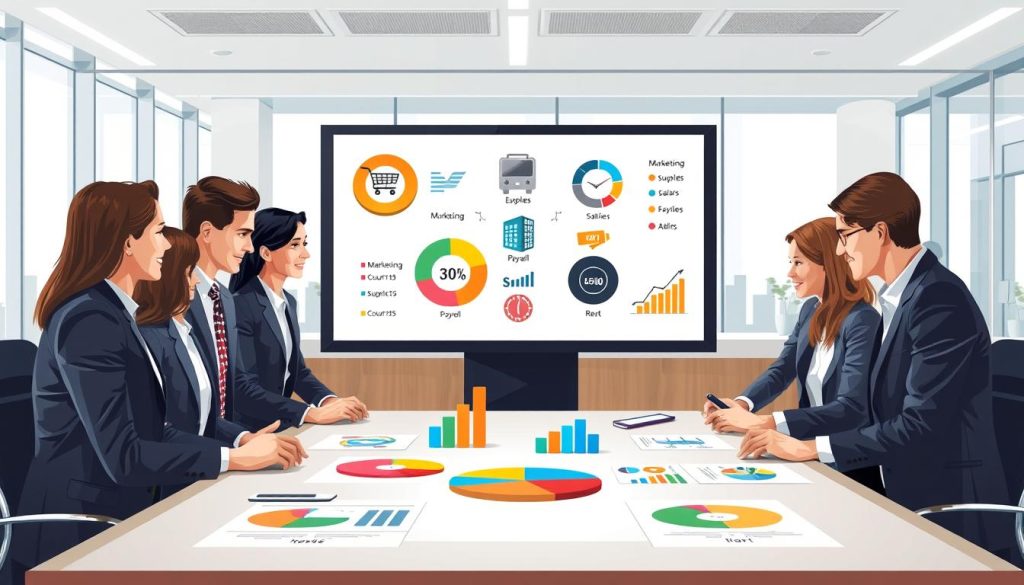
Organizing your financial outflows into clear categories enables more accurate tracking and optimization opportunities. This systematic approach helps you identify where your money goes and how each type supports your operations.
Proper classification transforms complex financial data into actionable insights. You’ll gain better control over your spending patterns and tax deductions.
Direct Costs vs. Indirect Costs
Direct costs are expenses directly tied to producing your goods or services. These include materials, labor, and production-related items.
Indirect costs support general operations but aren’t linked to specific products. Examples include administrative salaries, utilities, and office maintenance.
Understanding this distinction helps you allocate resources efficiently. It also ensures proper tax treatment for each expense type.
Common Expense Categories for Every Business
Most companies encounter similar spending categories regardless of industry. These fundamental groupings help standardize your financial tracking.
Our comprehensive approach covers everything from routine purchases to specialized deductions. You’ll learn to categorize effectively for maximum benefit.
| Category | Examples | Tax Treatment |
|---|---|---|
| Office & Home Office | Supplies, rent allocation, utilities | Direct deduction |
| Marketing & Advertising | Digital campaigns, print materials | Full deduction |
| Equipment & Assets | Computers, vehicles, machinery | Depreciation or immediate write-off |
| Insurance & Professional | Liability coverage, property insurance | Annual deduction |
| Travel & Entertainment | Client meetings, business trips | Partial or full deduction |
For specialized guidance on optimizing these categories, explore our expert expense optimization strategies. We help you navigate complex regulations with confidence.
Proper categorization protects your interests while maximizing financial efficiency. This knowledge forms the foundation of sound financial management.
Leveraging Technology for Expense Tracking
Digital tools have revolutionized expense management, providing freelancers with powerful solutions for tracking their financial operations. Modern platforms eliminate manual processes while ensuring compliance with regulatory requirements.
Using Accounting Software for Accuracy
Contemporary accounting software automates the entire tracking process. These platforms connect directly to your bank account and corporate card, importing transactions automatically.
Mobile apps scan receipts and extract key details instantly. The software categorizes each expense using intelligent algorithms based on merchant data. This reduces manual work and minimizes errors in your financial records.
Electronic systems manage document lifecycles effectively. They send notifications when receipts or documents approach expiration dates. This ensures you maintain proper documentation for tax compliance.
Benefits of Real-Time Expense Monitoring
Real-time tracking provides immediate visibility into your spending patterns. You can monitor payments by category as they occur rather than waiting for monthly statements.
This immediate insight helps identify spending anomalies quickly. You gain the ability to respond faster to budget overruns or unauthorized transactions. The system displays spending by department or employee, offering comprehensive oversight.
Integrated systems create a seamless accounting ecosystem. Your corporate card, receipt scanning app, and accounting software work together harmoniously. This approach saves significant time while providing accurate financial data.
For comprehensive financial management, consider how these tools complement advanced invoicing systems to create a complete financial workflow.
Strategies to Optimize Spending for Your Company

Effective cost management goes beyond simple reduction to focus on maximizing value from every financial decision. The right approach preserves quality while improving your financial efficiency.
Tax efficiency remains crucial for any operation. You should only claim costs that serve legitimate professional purposes. Expenses with dual personal-use elements typically don’t qualify for deductions.
Cost-Cutting Techniques Without Sacrificing Quality
We provide proven methods to reduce unnecessary spending. These techniques maintain the quality of products and services your organization delivers.
Regularly review service contracts and subscriptions. Eliminate redundant costs and renegotiate terms to match your actual usage patterns. This approach ensures your money supports current needs effectively.
Strategic management protects your bottom line while preserving growth resources. Prioritize costs that directly contribute to revenue generation. This allocation provides the strongest return on investment.
| Optimization Technique | Implementation | Expected Outcome |
|---|---|---|
| Service Contract Review | Quarterly assessment of all subscriptions | 15-30% reduction in operational costs |
| Professional Services Negotiation | Renewal discussions 60 days before contract end | Better rates without expertise compromise |
| Payment Channel Separation | Dedicated company account for all professional payments | Clear financial tracking and audit readiness |
| ROI-Focused Spending | Monthly analysis of cost-to-revenue ratios | Improved financial efficiency and growth |
Make sure all professional payments flow through your dedicated account. This creates clear separation between personal and professional finances. The practice supports both tax compliance and audit preparation.
Implementing Effective Expense Management Systems
A structured approach to handling your financial outlays ensures consistent compliance while supporting operational efficiency. Well-defined systems transform financial tracking from an administrative burden into a strategic advantage for your organization.
We help you establish comprehensive frameworks that standardize how your company processes, approves, and reimburses costs. This creates transparency and accountability across your entire operation.
Practical Tools and Software Solutions
Modern software solutions streamline the entire workflow from purchase to reconciliation. These platforms automate receipt capture, approval routing, and accounting integration.
You can implement systems that provide real-time visibility into your company account activity. This empowers your team while maintaining appropriate oversight for all financial transactions.
Establishing a Company Expense Policy
Creating clear rules is essential for managing spending effectively. Your policy should define allowable categories and set limits for different purchase types.
Include specific guidelines for entertainment expenses, home office costs, and employee benefits. This ensures proper documentation for each unique category.
Establish approval hierarchies that balance control with operational flexibility. Your employees need clear understanding of spending authority for various business purposes.
We recommend maintaining accurate records and receipts for every transaction. Incomplete documentation can result in disallowed deductions during reviews.
Ensuring Compliance with Financial Regulations
French tax authorities maintain strict requirements for substantiating all professional deductions. Proper documentation serves as your primary protection against potential liabilities and ensures you can claim legitimate tax benefits.
Maintaining Accurate Records and Receipts
Comprehensive documentation is essential for every transaction. French regulations require detailed receipts showing the nature, amount, and professional purpose of each payment.
You must retain these documents for the required number of years. This practice protects your company during potential audits.
| Document Type | Required Details | Retention Period |
|---|---|---|
| VAT Receipts | Supplier info, VAT number, amount | 6 years |
| Bank Statements | All professional transactions | 5 years |
| Professional Fees | Service details, payment dates | 5 years |
| Industry Payments | Association dues, certifications | 3 years |
Understanding Local Tax Regulations in France
French tax rules vary by industry and professional structure. Specific regulations govern different types of deductible costs throughout the year.
At Umalis France, we help you navigate these complexities. Our expertise ensures compliance while maximizing legitimate deductions. Consider our comprehensive freelance tax preparation services for self-employed professionals.
Integrating « Business Expenses » into Your Operational Strategy
When financial management aligns seamlessly with your operational goals, you gain powerful insights into resource allocation. This integration transforms tracking from routine administration to strategic advantage.
At Umalis France, we help independent professionals connect spending patterns with growth objectives. Our approach ensures your financial systems support rather than hinder company development.
Aligning Expense Categories with Business Goals
Effective categorization reflects your unique operational structure. Whether organized by department, project, or service line, the system should provide meaningful spending insights.
We recommend broad categories supplemented by custom fields. This balance maintains accounting simplicity while capturing detailed transaction context.
| Alignment Strategy | Implementation Approach | Strategic Benefit |
|---|---|---|
| Department-Based | Group costs by functional areas | Clear accountability and budget control |
| Project-Focused | Track spending per client initiative | Accurate profitability analysis |
| Service Line Tracking | Monitor costs for each offering | Informed pricing decisions |
| Growth Phase Alignment | Adapt categories to company stage | Relevant performance metrics |
Custom fields capture the who, what, where, and why of each transaction. This granularity enables sophisticated analysis without creating excessive complexity.
Our guidance helps establish practices serving multiple purposes: budgeting, cost control, and strategic decision-making. Discover comprehensive support through our expense management resources.
Well-organized financial data identifies trends and forecasts future costs. This informs investment decisions for home office improvements or expanded services.
Real-World Examples and Case Studies
Concrete examples from French professionals demonstrate how strategic financial management transforms operational efficiency and profitability. Seeing how others have successfully navigated similar challenges provides practical insights you can apply to your own situation.
Success Stories from Businesses in France
We’ve worked with independent consultants who reduced their tax burden by properly categorizing home office costs and equipment depreciation. One marketing specialist saved over 15% annually by implementing systematic tracking from day one.
Another startup company identified unnecessary subscriptions through regular account reviews. They redirected these resources toward hiring additional employees and upgrading essential equipment. This strategic shift accelerated their growth significantly.
Many professionals use tools like Umalis France’s income simulator to understand how different cost structures affect their take-home income. This helps them make informed decisions about their entrepreneurship journey and financial planning.
Lessons Learned from Expense Optimization
The most valuable lesson from our case studies is that organized financial systems save significant time during tax season. Companies that implement proper tracking avoid the stressful scramble to reconstruct spending records.
Businesses across different industries—from consulting services to e-commerce ventures—have adapted category frameworks to their specific needs. Whether tracking vehicle use or marketing campaign costs, the right system turns financial chaos into strategic advantage.
These examples show measurable benefits: some companies save up to 5% annually by using automated systems. The time savings and improved cash flow enable better financial decisions across all operations.
Conclusion
Taking control of your professional finances transforms administrative tasks into strategic advantages for growth. Throughout this guide, you’ve gained essential knowledge to categorize operational costs effectively and maximize legitimate tax benefits.
We’ve equipped you with practical systems that save valuable time while ensuring compliance. From selecting the right accounting software to establishing clear company policies, these strategies position your venture for sustainable success.
At Umalis France, we remain dedicated to supporting your financial journey with expert guidance and powerful tools. Discover comprehensive solutions through our trusted e-commerce platform designed for independent professionals.
Use our income simulator at https://www.umalis.fr/simulateur-de-revenu/ to visualize how optimized financial management impacts your earnings. Explore additional resources at https://en.umalis.fr/ for ongoing support that brings clarity and security to your operations.
Proper financial organization isn’t just about compliance—it’s about building the foundation for a prosperous, confident professional future.
FAQ
What qualifies as a deductible cost for my company?
Deductible costs are those that are both ordinary and necessary for your trade or profession. This includes items like office supplies, professional services fees, employee salaries, and marketing costs. These are essential for generating income and can be subtracted from your gross revenue to determine your taxable income.
How can accounting software help me manage my company’s costs?
Modern accounting software, like QuickBooks or Xero, automates tracking and categorizing payments. It provides real-time visibility into your spending, simplifies bank reconciliation, and generates accurate reports. This helps you make informed financial decisions and ensures your records are ready for tax season.
Are home office costs deductible for independent professionals?
Yes, if you use a part of your home regularly and exclusively for work, you can deduct related costs. This can include a portion of your rent, utilities, and insurance. It’s crucial to maintain precise records and understand the specific calculation methods allowed by tax authorities to ensure compliance.
What are the rules for deducting travel and entertainment payments?
Travel costs incurred for legitimate work purposes are generally deductible. For entertainment, the rules are stricter; the activity must be directly related to or associated with your trade. Always keep detailed receipts and document the business purpose, attendees, and discussion points for each event.
Why is it important to separate personal and company accounts?
Maintaining separate bank accounts and credit cards is fundamental for clear financial management. It simplifies bookkeeping, provides a clear audit trail, and protects your personal assets. This separation is critical for accurately tracking deductible costs and proving their legitimacy to tax authorities.
What common startup costs can I deduct in the first year?
Many initial costs, such as market research, legal fees for incorporation, and necessary equipment purchases, can be deducted. Some may need to be amortized over several years. Consulting with a tax professional can help you maximize your deductions correctly from the beginning.
How does effective cost management impact my annual tax liability?
Properly tracking and deducting allowable costs directly reduces your taxable income. A lower taxable income means a lower tax bill. Strategic management throughout the year ensures you claim all eligible deductions, optimizing your financial position and improving cash flow.