
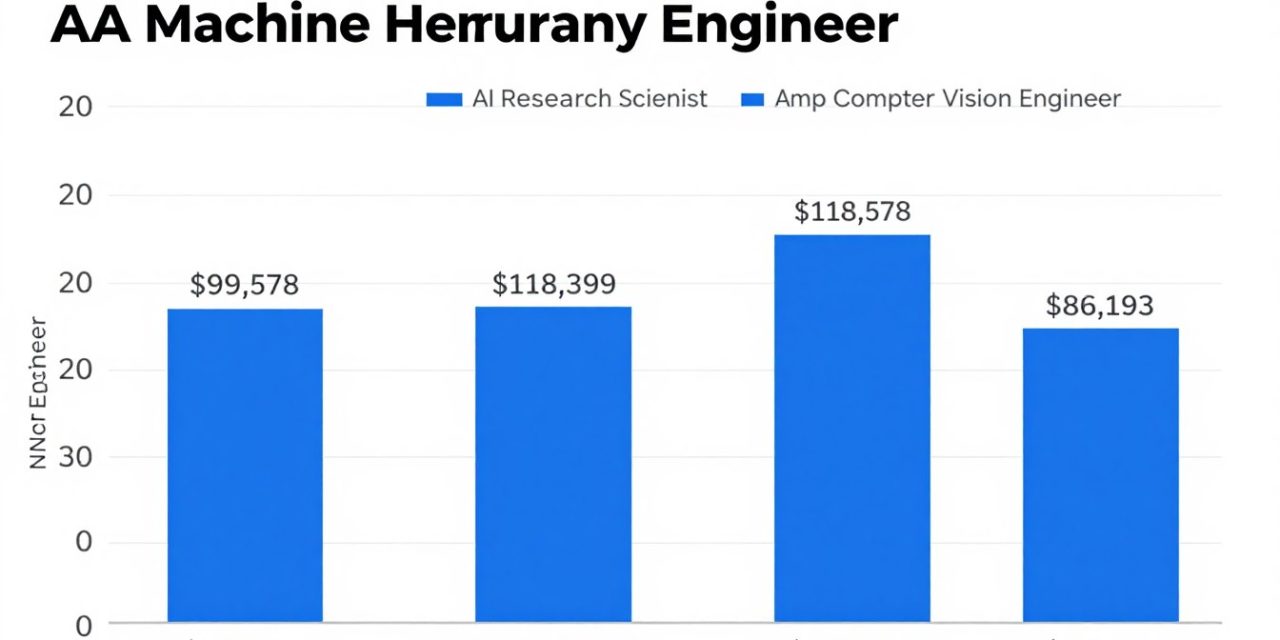
The artificial intelligence job market continues to experience unprecedented growth in 2024, with companies competing fiercely for top talent. AI professionals are commanding premium salaries that far outpace traditional tech roles, with some specialized positions seeing compensation packages exceeding $500,000 annually. This salary explosion reflects both the critical importance of AI to business strategy and the persistent shortage of qualified candidates with the right combination of technical expertise and domain knowledge.
Our comprehensive analysis of current AI salary data reveals not just the numbers, but the factors driving these exceptional compensation trends and what they mean for professionals looking to maximize their earning potential in this dynamic field.
Table of Contents
AI Salary Benchmarks: What Top Roles Command in 2024
The artificial intelligence sector continues to offer some of the highest-paying opportunities in the tech industry. Our analysis of current salary data shows significant variations across different AI specializations, with certain roles commanding exceptional premiums.
| AI Role | Entry-Level | Mid-Level (3-5 years) | Senior (8+ years) |
| Machine Learning Engineer | $98,798 | $122,505 | $153,286 |
| AI Research Scientist | $94,972 | $114,931 | $142,511 |
| Data Scientist (AI-focused) | $110,720 | $127,098 | $145,724 |
| Computer Vision Engineer | $120,000 | $168,803 | $200,000+ |
| NLP Engineer | $107,000 | $170,000 | $231,000 |
The data reveals that specialized roles like Computer Vision Engineers and NLP Engineers are seeing particularly strong salary growth, reflecting the increasing application of these technologies across industries. Machine learning engineers continue to be in high demand, with median compensation of $123,117 according to recent data.
What’s particularly notable is the rapid acceleration in compensation as professionals gain experience. The jump from entry-level to mid-level positions often represents a 20-30% increase, while senior professionals with 8+ years of experience can command salaries 50-100% higher than their entry-level counterparts.
Key Factors Influencing AI Salaries
The wide range in AI compensation isn’t arbitrary. Several critical factors determine where an individual falls within these salary bands:

Geographic Location
Location remains one of the most significant salary multipliers in the AI field. Our analysis shows dramatic regional variations:
Top-Paying US Regions
- San Francisco Bay Area: $164,499 (AI Engineer)
- New York City: $141,539 (AI Engineer)
- Seattle: $135,000 (Machine Learning Engineer)
- Boston: $130,000 (Data Scientist)
- Austin: $125,000 (AI Researcher)
International AI Hubs
- London: €95,000 (£80,000)
- Zurich: €120,000 (CHF 115,000)
- Paris: €85,000
- Singapore: S$120,000 (US$89,000)
- Toronto: C$110,000 (US$81,000)
Experience Level
The experience premium in AI is substantial, with senior professionals often earning double what entry-level positions command. This reflects both the accumulation of technical expertise and the development of business acumen that allows senior AI professionals to deliver measurable value.
Technical Specialization
Certain technical skills command significant premiums in the current market:
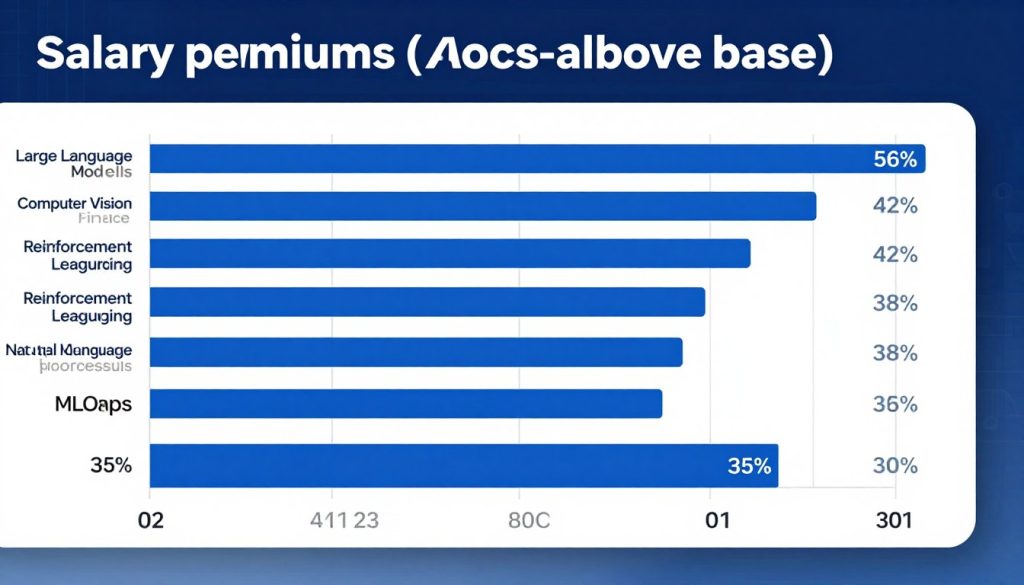
Large Language Models (LLMs) expertise currently commands the highest premium, with professionals skilled in this area earning up to 56% more than their peers. This reflects the explosive growth of generative AI applications across industries.
Industry Sector
The industry in which an AI professional works significantly impacts compensation. Finance, technology, and healthcare typically offer the highest salaries, while education, government, and non-profits tend to pay less despite increasing their AI investments.
Company Size and Type
Big Tech companies (FAANG+) and well-funded AI startups typically offer the most competitive compensation packages, often including substantial equity components. Traditional enterprises are increasingly competing for AI talent but generally offer lower total compensation with greater emphasis on stability and work-life balance.
High-Demand AI Skills Commanding Premium Salaries
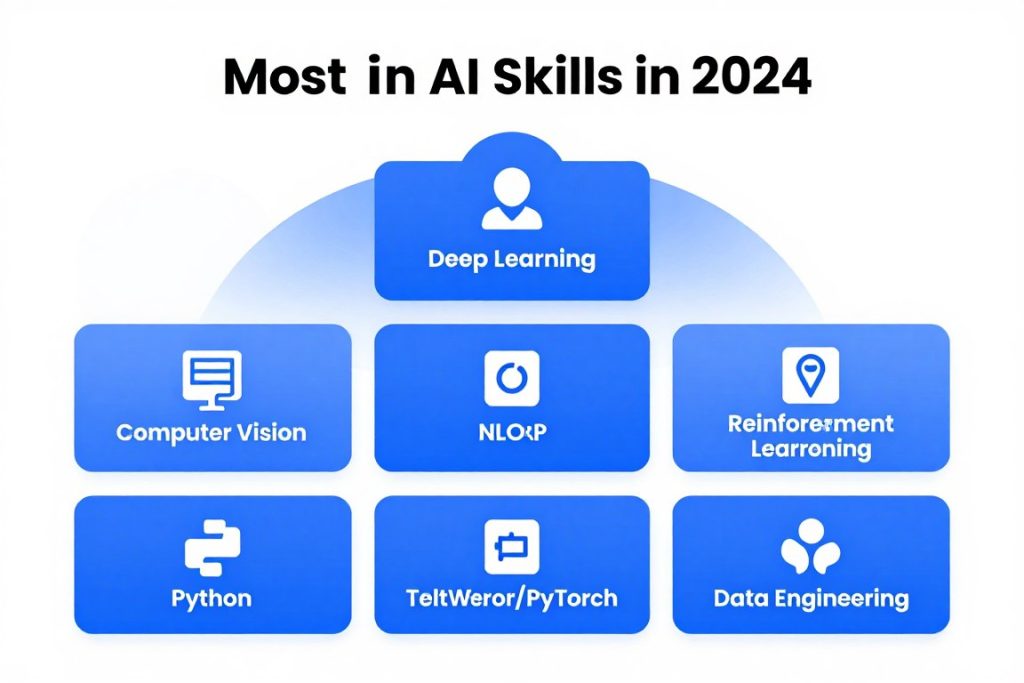
The skills that command the highest salary premiums in AI are constantly evolving as technology advances. Our analysis identifies several key competencies that employers are willing to pay a premium for in 2024:
Technical Skills
Deep Learning & Neural Networks
Expertise in transformer architectures, diffusion models, and reinforcement learning frameworks commands the highest premiums, with professionals skilled in these areas earning 40-55% more than their peers.
Large Language Models
Experience with LLMs like GPT-4, Claude, and Llama has become the single most valuable technical skill in 2024, with professionals who can fine-tune and deploy these models commanding salary premiums of up to 56%.
MLOps & Production AI
The ability to build and maintain production AI systems is increasingly valuable, with MLOps engineers earning 30-40% more than data scientists who lack deployment experience.
Domain Expertise
Technical skills alone aren’t enough to command top salaries. Domain expertise in specific industries significantly amplifies earning potential:
- Finance: AI professionals with expertise in algorithmic trading, risk assessment, or fraud detection can command 25-35% higher salaries.
- Healthcare: Experience with medical imaging, clinical NLP, or drug discovery can increase compensation by 20-30%.
- Retail: Expertise in recommendation systems, inventory optimization, or customer analytics adds a 15-25% premium.
- Manufacturing: Knowledge of predictive maintenance, quality control, or supply chain optimization is worth a 15-20% premium.
- Cybersecurity: AI professionals who can apply machine learning to threat detection or vulnerability assessment earn 25-35% more.
- Marketing: Experience with attribution modeling, customer segmentation, or content optimization adds 10-20% to compensation.
Soft Skills & Business Acumen
Beyond technical expertise, certain soft skills significantly impact earning potential in AI roles:
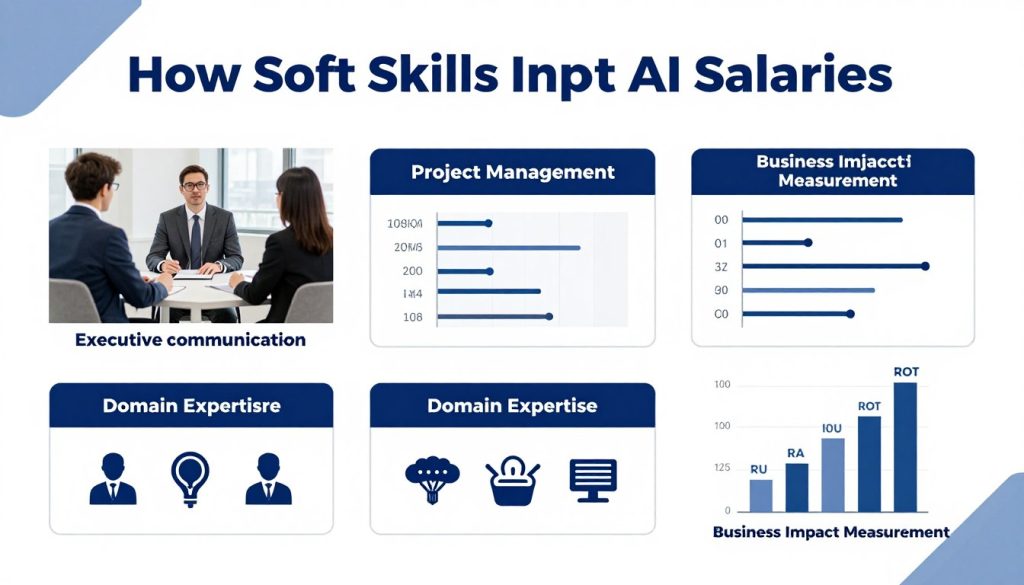
- Executive Communication: The ability to translate complex technical concepts for business leaders can add 15-25% to compensation packages.
- Project Management: Experience leading cross-functional AI initiatives increases earning potential by 10-20%.
- Business Impact Measurement: Professionals who can quantify the ROI of AI projects command 20-30% higher salaries.
Maximize Your AI Career Potential
Discover which AI skills are most valuable in your industry and how to develop them strategically.
Geographic Breakdown: AI Salary Hotspots
The global distribution of AI talent and compensation reveals distinct patterns, with certain regions emerging as clear salary leaders:

North America
The United States continues to lead global AI compensation, with the San Francisco Bay Area setting the benchmark for top salaries. However, emerging tech hubs are narrowing the gap:
| City | AI Engineer | Machine Learning Engineer | Data Scientist |
| San Francisco | $164,499 | $149,795 | $149,378 |
| New York | $141,539 | $124,920 | $126,859 |
| Seattle | $135,000 | $130,000 | $125,000 |
| Austin | $125,000 | $121,462 | $107,848 |
| Toronto | C$120,000 | C$115,000 | C$105,000 |
Europe
European AI salaries generally lag behind their US counterparts, but certain hubs like London, Zurich, and Berlin offer increasingly competitive compensation:
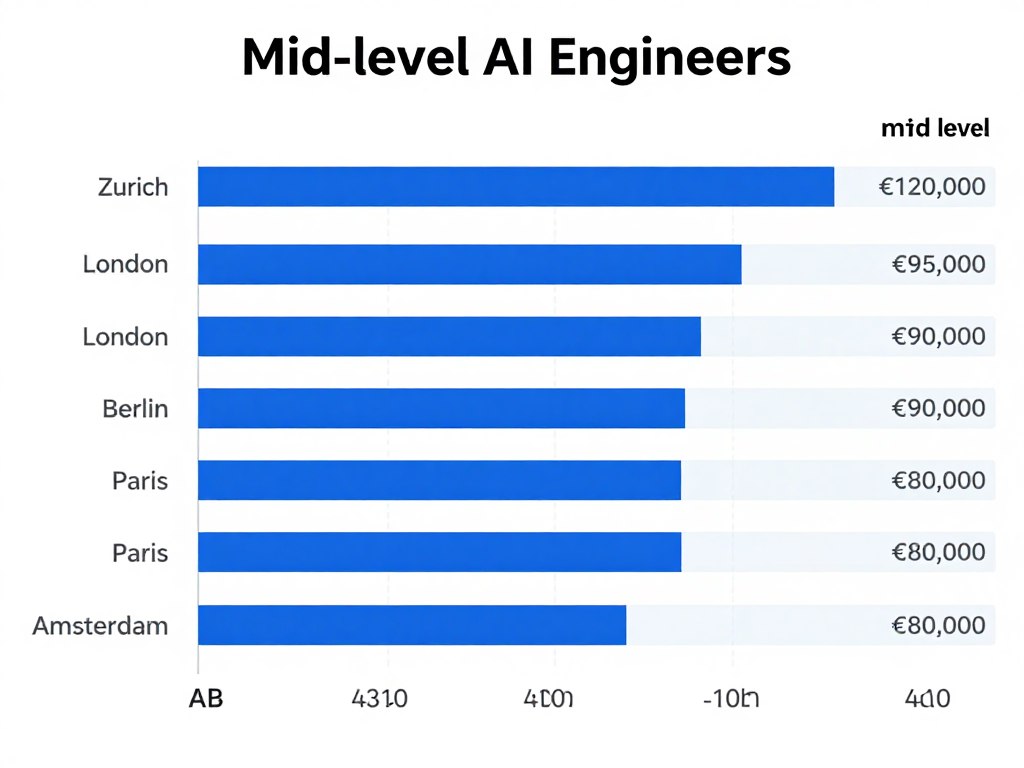
Zurich stands out as Europe’s highest-paying AI hub, with salaries approaching US levels due to the presence of Google’s research lab and Switzerland’s strong financial sector. London follows, bolstered by its fintech industry and AI research centers.
Asia-Pacific
The Asia-Pacific region shows the most dramatic salary variations, with Singapore and Australia offering compensation packages closest to Western levels:
- Singapore: S$120,000-S$180,000 (US$89,000-US$134,000)
- Sydney: A$120,000-A$160,000 (US$80,000-US$107,000)
- Tokyo: ¥10M-¥15M (US$67,000-US$100,000)
- Beijing/Shanghai: ¥300K-¥800K (US$42,000-US$112,000)
- Bangalore: ₹1.5M-₹3M (US$18,000-US$36,000)
While absolute figures in countries like India appear lower, they represent significant premiums relative to local market rates, with AI professionals often earning 3-5x the median salary in their regions.
Industry Variances: Where AI Commands Top Dollar
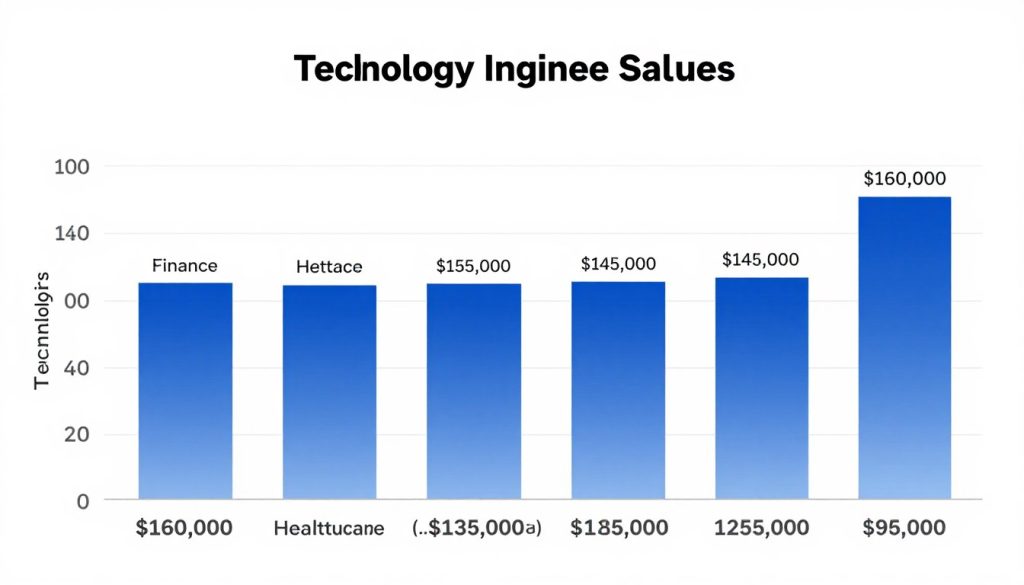
AI salary data reveals significant variations across industries, reflecting differences in AI adoption maturity, competitive pressures, and revenue impact:
Technology
The technology sector continues to set the benchmark for AI compensation, with companies like Meta, Google, and Microsoft offering the most competitive packages:
Big Tech (FAANG+)
- Meta: Up to $451,000 total compensation for AI Engineers
- Google: Up to $348,000 for Machine Learning Engineers
- Microsoft: Up to $375,000 for senior AI specialists
AI-First Companies
- OpenAI: Up to $530,000 for Research Engineers
- Anthropic: $300,000-$450,000 for AI Researchers
- Cohere: $250,000-$350,000 for ML Engineers
Finance
Financial institutions are increasingly competing with tech companies for AI talent, offering compensation packages that approach or sometimes exceed tech sector benchmarks:
- Hedge Funds: $200,000-$500,000+ for quantitative researchers and AI specialists
- Investment Banks: $180,000-$300,000 for machine learning engineers
- Insurance: $150,000-$250,000 for AI risk assessment specialists
Healthcare
The healthcare sector has accelerated AI adoption, particularly following the pandemic, with corresponding increases in compensation:
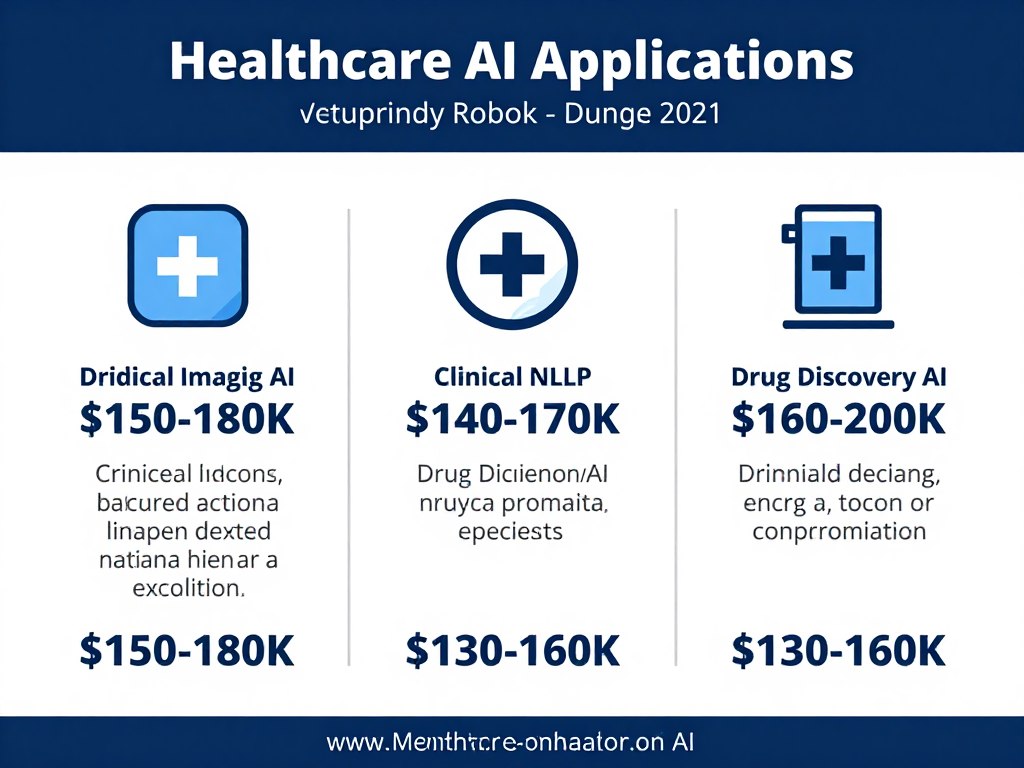
Pharmaceutical companies and health tech startups typically offer the most competitive packages, while hospital systems and public health organizations tend to pay less despite increasing their AI investments.
Emerging Industries
Several industries are rapidly increasing their AI investments and compensation packages to attract talent:
Automotive
Self-driving vehicle development has pushed automotive AI salaries to $130,000-$200,000 for specialists in computer vision and reinforcement learning.
Energy
AI for grid optimization and renewable energy forecasting commands $120,000-$180,000, with oil and gas companies offering premium packages to attract talent.
Agriculture
Precision agriculture and supply chain optimization specialists earn $110,000-$160,000, with AgTech startups competing aggressively for AI talent.
Actionable Insights: Maximizing Your AI Earning Potential
Based on our comprehensive analysis of AI salary data, we’ve identified several strategies that professionals can employ to maximize their earning potential in this dynamic field:
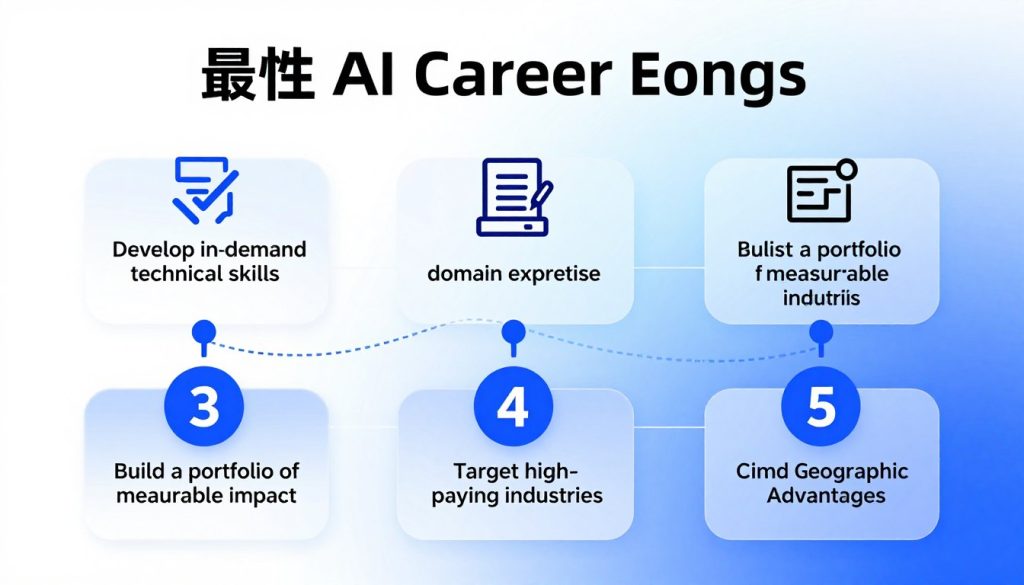
Strategic Skill Development
Focus on developing skills that command the highest premiums in the current market:
Technical Focus Areas
- Large Language Models (LLMs) and generative AI
- Production ML engineering and MLOps
- Computer vision for specialized applications
- Reinforcement learning for optimization problems
Complementary Skills
- Cloud platforms (AWS, Azure, GCP)
- Data engineering and big data technologies
- Business analytics and ROI measurement
- Project management methodologies
Industry and Company Targeting
Strategic targeting of specific industries and company types can significantly impact compensation:
The industry you choose can have a greater impact on your compensation than your specific role or even your years of experience. AI professionals in finance often earn 20-30% more than those with identical skills in education or non-profit sectors.
- High-Growth Startups: Consider AI-first startups with strong funding, which often offer lower base salaries but substantial equity that can yield significant returns.
- Big Tech: Target FAANG+ companies for the highest total compensation packages, including substantial stock grants and bonuses.
- Finance: Hedge funds and quantitative trading firms offer exceptional compensation for AI professionals who can directly impact trading strategies.
Geographic Strategy
Location continues to play a crucial role in compensation, but remote work is changing the equation:
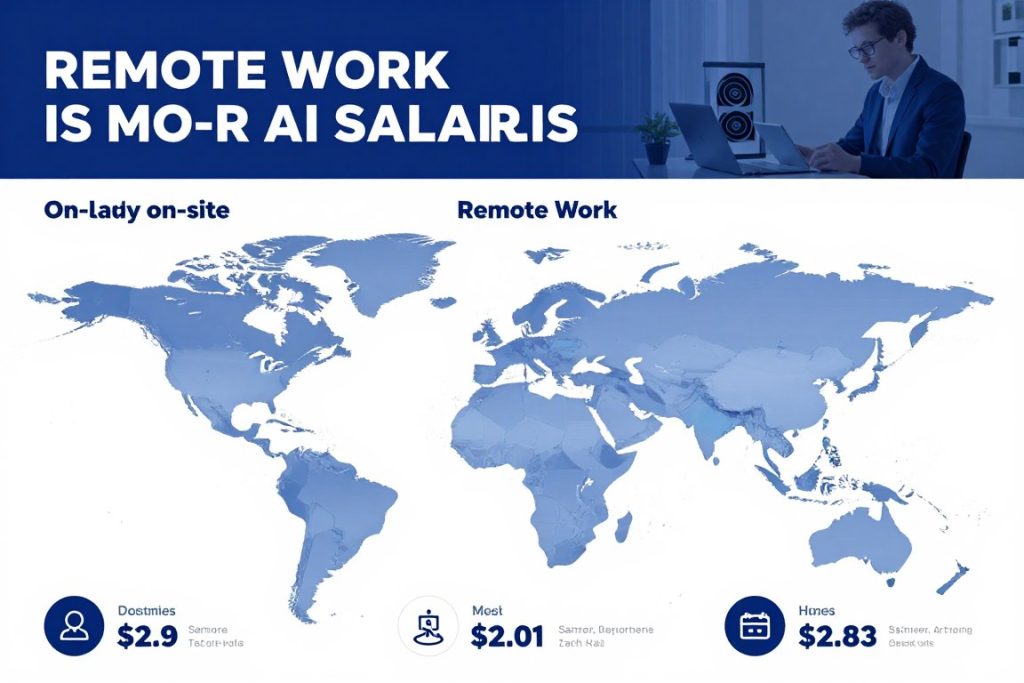
While remote opportunities have expanded, many companies still maintain location-based pay scales. Consider these strategies:
- Target companies with uniform global pay scales for remote workers
- Leverage remote work to live in lower-cost areas while earning big-city salaries
- Consider « geo-arbitrage » by working for US companies while based in lower-cost international locations
Negotiation Leverage
AI professionals often leave significant compensation on the table due to ineffective negotiation. Maximize your leverage with these approaches:
Quantify Your Impact
Document specific examples where your AI work delivered measurable business results, such as revenue increases, cost savings, or efficiency improvements. Quantified impact provides concrete negotiation leverage.
Benchmark Appropriately
Use resources like levels.fyi, Glassdoor, and industry reports to benchmark compensation packages. Focus on total compensation (base, bonus, equity) rather than just base salary when comparing offers.
Unlock Your AI Salary Potential
Get personalized insights on how your skills and experience compare to industry benchmarks.
Future Outlook: AI Salary Trends for 2024 and Beyond
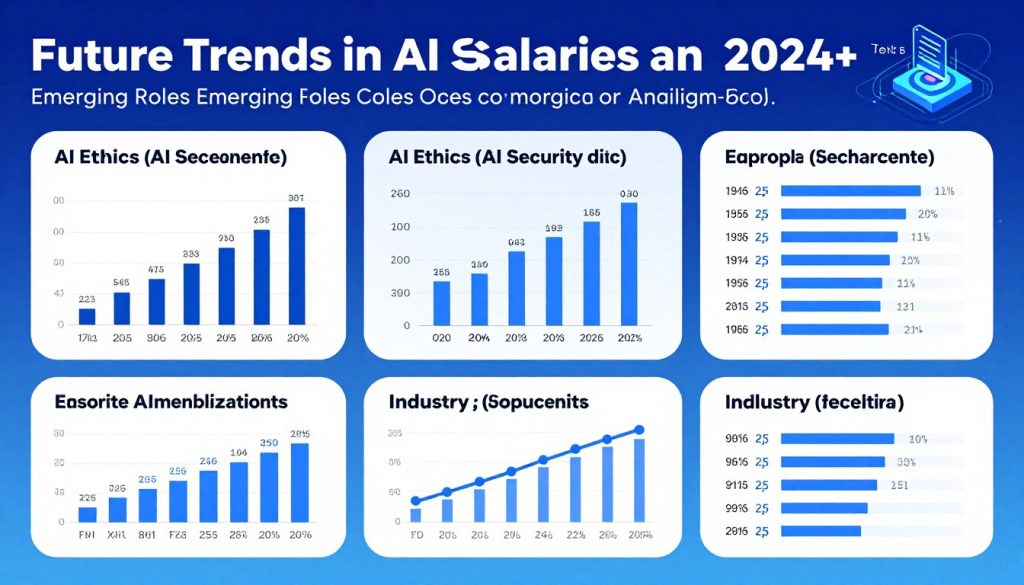
Our analysis of current market dynamics suggests several important trends that will shape AI compensation in the coming years:
Emerging Specializations
Several new AI specializations are emerging with strong compensation potential:
AI Ethics & Governance
As regulatory scrutiny increases, specialists who can navigate AI ethics, compliance, and governance are seeing growing demand, with salaries ranging from $130,000 to $200,000.
AI Security
Professionals who can secure AI systems against adversarial attacks and data poisoning are commanding premiums of 30-40% above standard AI roles, with compensation reaching $175,000 to $250,000.
Multimodal AI
Engineers skilled in building systems that integrate text, image, audio, and video understanding are seeing rapidly growing demand, with salaries of $150,000 to $220,000.
Industry Expansion
AI adoption is accelerating across previously underrepresented sectors, creating new opportunities:
- Government: Public sector AI adoption is accelerating, with federal agencies offering increasingly competitive packages to attract talent from the private sector.
- Education: EdTech companies are investing heavily in AI, with compensation packages approaching tech industry standards for specialized roles.
- Legal: AI for contract analysis, legal research, and compliance is creating a new category of legal tech roles with salaries of $130,000 to $180,000.
Compensation Structure Evolution
The structure of AI compensation packages is evolving in response to market conditions:
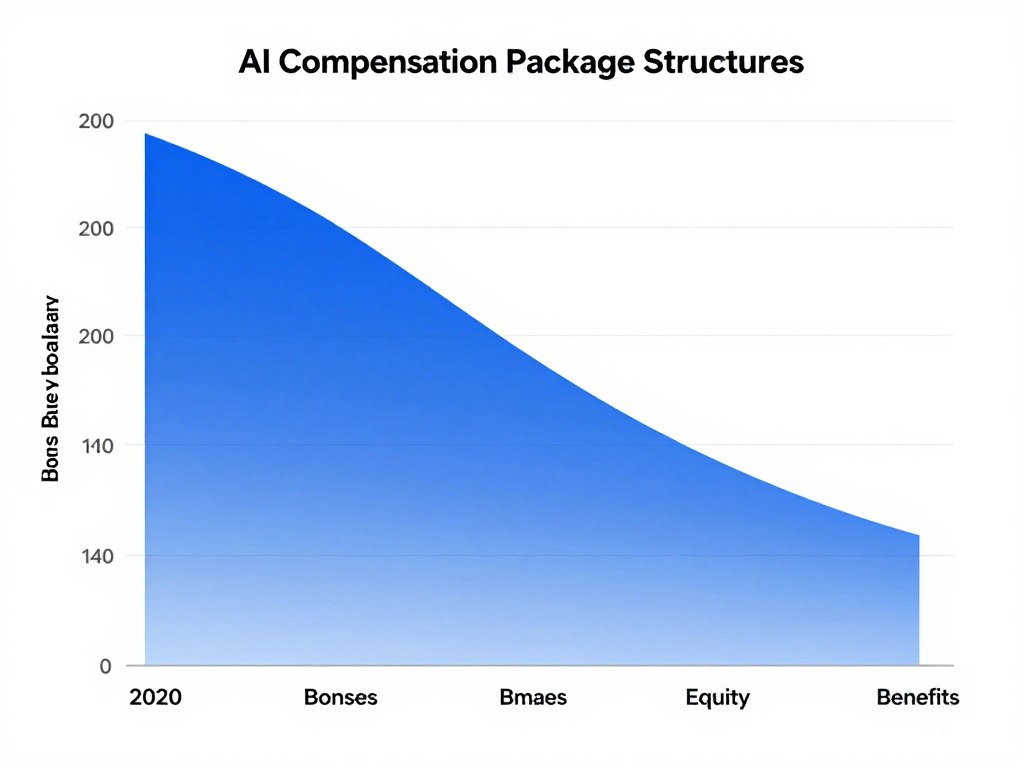
Equity components are becoming increasingly important, particularly for AI-first startups and scale-ups. Performance-based bonuses tied to specific AI project outcomes are also growing in popularity as companies seek to align compensation with measurable business impact.
Skill Inflation and Specialization
As AI education becomes more accessible, we’re seeing early signs of skill inflation for entry-level positions. The premium for basic machine learning knowledge is declining, while the value of specialized expertise and proven implementation experience continues to grow.
This trend suggests that professionals should focus on developing deep expertise in specific AI domains rather than pursuing breadth across multiple areas. The highest compensation will go to those who combine technical depth with domain knowledge and business acumen.
Conclusion: Navigating the Dynamic AI Salary Landscape
The AI salary landscape in 2024 reflects both the transformative potential of artificial intelligence and the persistent shortage of qualified professionals who can deliver on that promise. Our comprehensive analysis reveals a market characterized by exceptional compensation for specialized skills, significant geographic and industry variations, and rapidly evolving demands.
For professionals looking to maximize their earning potential in this dynamic field, the path forward involves strategic skill development focused on high-demand specializations, thoughtful targeting of industries and companies where AI delivers the greatest value, and effective positioning of one’s expertise in terms of business impact rather than technical sophistication alone.
As AI continues to transform industries and create new categories of work, the premium for AI expertise shows no signs of diminishing. However, the specific skills and specializations commanding the highest compensation will continue to evolve, requiring professionals to remain adaptable and committed to continuous learning.
Stay Ahead of AI Salary Trends
Get quarterly updates on the latest AI compensation data, emerging roles, and in-demand skills.